Hidden Costs of LED Display Projects: How Low-Priced Screens Eat Up Your Margin
The invoice said you saved 40%. Two years later, dead pixels, a dark module, and a supplier who stopped replying. Here is where the real cost of a “cheap” LED screen hides.
The Margin That Vanishes After Delivery
You won the order because your number was the lowest on the table. Eighteen months later, the screen you installed has a streak of dead pixels, one module that will not light, and the “24/7 after-sales support” on the invoice is now a chat account that no one answers.
Now you are buying spare modules from a stranger on the market, paying a local technician by the hour, and apologizing to a client who is already asking your competitor for a quote. The $60,000 you “saved” is being clawed back — one dead pixel, one dark module, one lost renewal at a time.
In this article
1. The Hidden-Cost Chain of Low-Priced LED Displays
A low sticker price does not come from generosity. It comes from thinner spec sheets, looser quality gates, and after-sales promises that cost the factory money to keep. The cost is not removed — it is moved to you, later, after delivery.
This chain is not hypothetical. It shows up in warranty claims, project penalties, and the client who never sends you a second order.
2. SMD vs GOB vs COB: Where the Failure Risk Lives
Every LED technology has a failure mode. The difference is how early it appears, how often it happens, and what it costs you to fix. Here is what fault-troubleshooting field data tells us about the three mainstream options.
Surface-Mounted Device
- Failure mode: physical knock & moisture.
- Exposed lamp beads pop off the board during transport or install; moisture seeps in and kills lamps one by one.
- Repair: possible but frequent — single dead lamps are re-soldered, endlessly, on large areas.
- Hidden cost: constant touch-up visits and a screen that ages visibly fast.
Glue-On-Board
- Failure mode: the glue layer.
- Bubbles, uneven thickness and yellowing are process defects that create optical mura and hide early damage until it spreads.
- Repair: harder — glue must be removed first, so field repair is slow and risky.
- Hidden cost: a “protected” screen that still fails, now harder to fix.
Chip-On-Board
- Failure mode: module-level, not point-level.
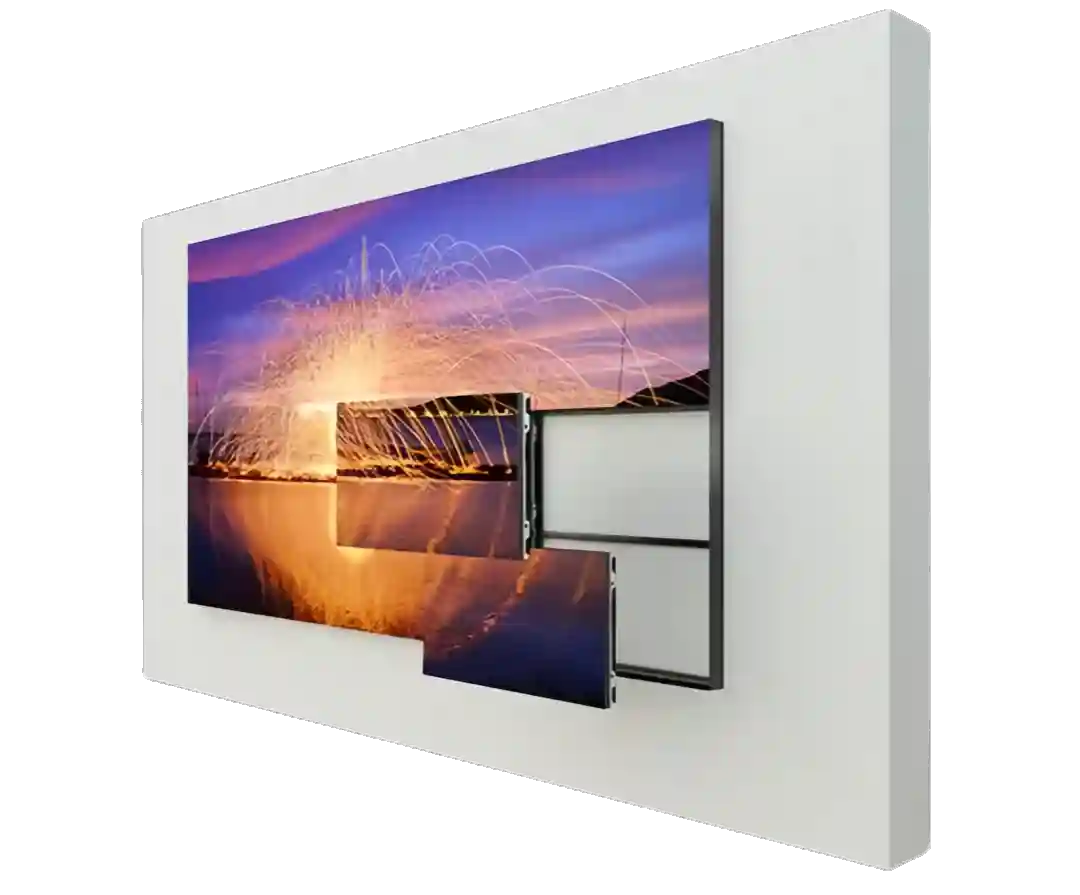
- Direct encapsulation makes COB the most robust option — resistant to knocks, moisture and dust.
- Repair: a failed module is generally replaced as a whole, not repaired point-by-point on site.
- Hidden cost: you must keep spare modules in stock — so a quality supplier matters.
3. Full-Lifecycle Cost: Why Cheap LED Screens Cost More
Buyers compare the sticker price. Operators pay the lifecycle. Add power, repair, spares and downtime to the purchase price, and the “cheap” screen is no longer cheap. Below is a realistic 5-year model for a 120 m² indoor display.
| Cost item | Low-price SMD screen | Quality COB LED display |
|---|---|---|
| Initial purchase | $96,000 | $156,000 |
| Electricity (5 yr) | $31,000 | $25,000 |
| Repair & spare parts (5 yr) | $22,000 | $5,500 |
| Downtime loss (5 yr) | $18,000 | $3,000 |
| 5-year total cost | $167,000 | $189,500 |
The $60,000 upfront saving shrinks to $22,500 over five years — and that is the typical case. One major failure, a vanished supplier, or a client penalty tips the balance the other way.
Read the chart not for exact dollars but for the shape: the low-price bar is mostly amber. That amber is the margin you hand back after the sale.
4. Why a COB LED Display Changes the Math
A quality COB LED display attacks hidden costs at the source. Full encapsulation removes the knock-and-moisture failure modes of SMD, so dead pixels are rare. Lower power draw and better heat design cut the electricity bill. And fewer field failures mean fewer technician visits and less downtime.
You still keep spare modules — that is the honest trade-off of COB. But a supplier who hands you an aging-test report with a low failure rate is telling you how many spares you will actually need. That number, not the sticker price, is what protects your margin.
5. The Inquiry Checklist: 4 Terms to Confirm Before You Order
Before you sign, put these four items in writing. A supplier who answers them clearly is a supplier who plans to be around in year three. A supplier who dodges them is pricing that absence into your quote.
- Spare parts supply — how many spares are included, at what price, and with what lead time after delivery.
- Warranty scope — what exactly is covered, the dead-pixel threshold, and whether service is on-site or return-to-factory.
- Repair method — point repair or module swap, who pays labor, and the turnaround time.
- Aging test report — aging hours, failure-rate data, and a batch test report you can verify.
FAQ: Hidden Costs of LED Display Projects
Why do low-priced LED screens fail sooner?
Lower-grade LEDs, thinner driver ICs and shorter aging tests. The savings come from skipping exactly the steps that prevent early failure — so dead pixels and module failure show up within the first one to two years.
Is a COB LED display worth the higher upfront price?
For long-running or hard-to-service installations, usually yes. COB’s encapsulation removes SMD’s knock and moisture failure modes, lowering repair and downtime costs enough to narrow the 5-year gap — and protecting you from tail-risk failures.
Can a dead pixel on a COB screen be repaired on site?
Generally not point-by-point; a failed COB module is replaced as a whole. That is why you confirm spare-module supply and a low failure-rate aging report before ordering.
How many spare modules should I keep?
It depends on the supplier’s failure-rate data and your project’s criticality. Confirm the number, price and lead time in writing at the inquiry stage — do not discover it after a module fails.
Stop pricing the invoice. Start pricing the lifecycle.
Ask us for the aging-test report, a spare-parts plan, and a 5-year total-cost model for your project — before you commit to a number.
Get Your TCO & Spare-Parts Plan