Where COB LED Displays Actually Land: Five Commercial Sectors, Real Project Data, and a Deployment Playbook
Command centers, corporate showrooms, boardrooms, cultural venues, retail floors — a sector-by-sector look at how COB LED display technology performs in production environments.
The commercial display conversation has moved on from pixel specs to total cost of ownership, uptime, and viewer comfort. Chip-on-board (COB) LED display technology — with its seamless surface, face-light emission, and roughly 50% lower failure rate than discrete SMD packages — has quietly become the default choice for demanding indoor installations. This article walks through five real deployment sectors, quantifies the business value integrators and end users are reporting, and closes with a procurement checklist that keeps your COB LED video wall project out of the common traps.
1. The Tipping Point: Why Commercial Display Budgets Are Shifting to COB
Three market signals explain the acceleration. First, COB packaging now claims more than half of China's fine-pitch LED sales revenue, with government, energy, and transportation deployments running 24/7 as the primary pull (RUNTO). Second, pricing has crossed a psychological threshold: average COB module prices fell by roughly 31% year-over-year in 2025, bringing P1.2–P1.8 pitches inside mainstream corporate budgets. Third, integrators report that more than 80% of newly built provincial-level command centers in China now specify COB from the outset — when the most demanding customers converge on one technology, procurement risk drops for everyone else.
Behind the numbers sit three practical advantages that matter to facility managers: a COB LED display emits light from the whole encapsulated surface rather than point sources, so operators watching screens for ten hours a day report noticeably less eye strain; the chip-level epoxy-protected face survives knocks, dust, and cleaning, making it practical for public and high-touch spaces; and flip-chip common-cathode architectures cut power consumption by around 40% — which, for a wall that never turns off, compounds into serious money over five years.
2. Five Sectors, Five Deployments: What COB LED Display Projects Look Like in Production
24/7 mission-critical reliability as the entry ticket
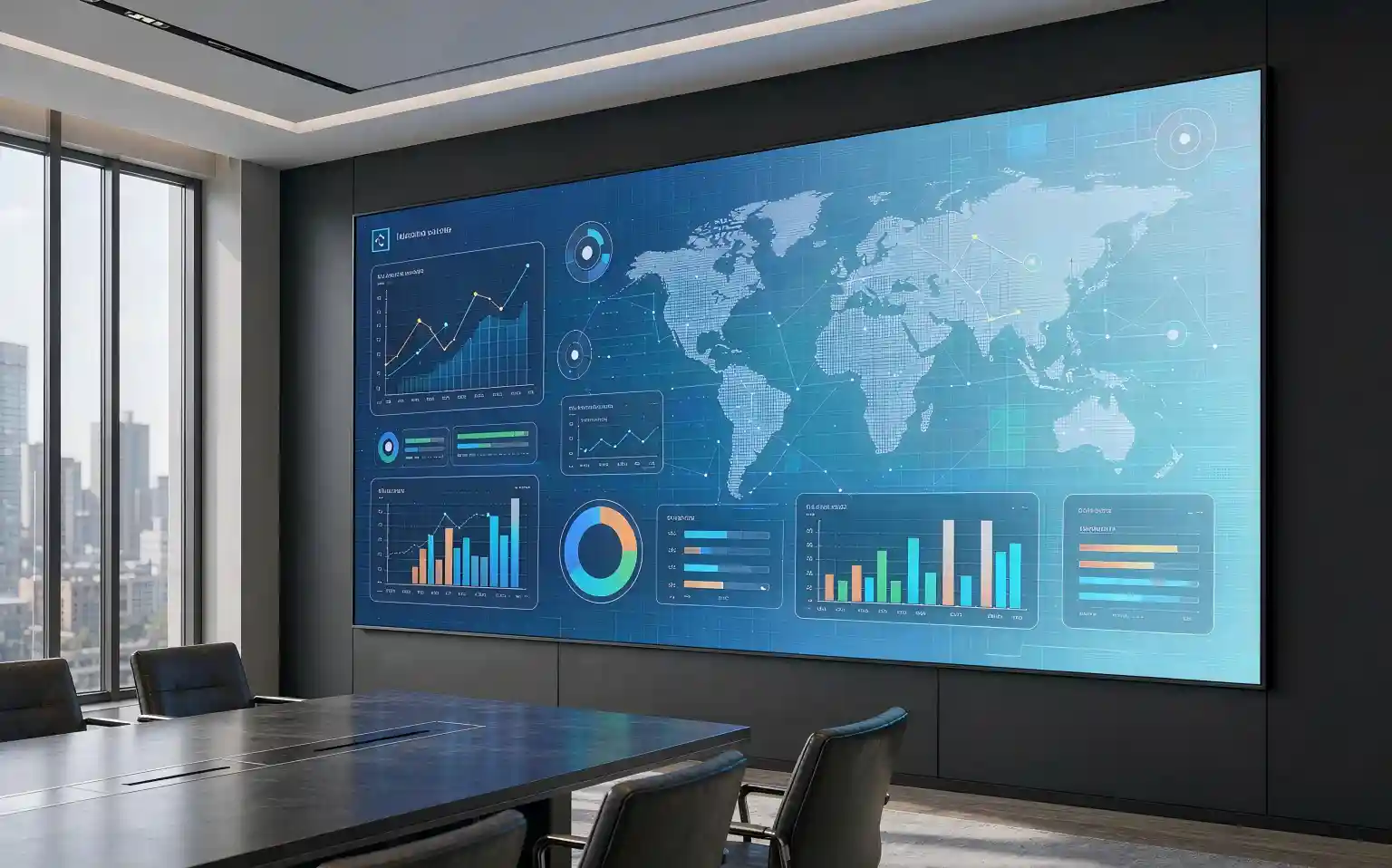
Command centers were COB's proving ground because they tolerate zero downtime and display a dozen simultaneous signal types — surveillance feeds, GIS maps, weather radar, emergency plans, multi-party video. Ledman equipped the Emergency Management Bureau of Ejin Horo Banner, Inner Mongolia, with a curved, free-form-splicing P0.9 ultra-HD COB wall for the command hall, backed by three 138-inch all-in-one COB units in the lobby — one display system covering command, consultation, and public information. In the earlier Shaanxi Provincial Emergency Management Department project, the main wall runs at 15360×2880 resolution with seamless arc splicing for live incident handling. Internationally, AET delivered an NX COB 1.5mm video wall with 45° bevel-spliced rotating columns for the national emergency command center in Kokshetau, Kazakhstan — opened by the country's president — while its P1.2 flip-chip COB installation for the Linzhi Highway Bureau in Tibet demonstrates stable operation under high-altitude UV exposure and extreme temperature swings.
Spec essentials: P0.9–P1.5 pixel pitch, 7680Hz-class refresh, redundant power and signal, full front maintenance.
The seamless digital canvas as a brand statement
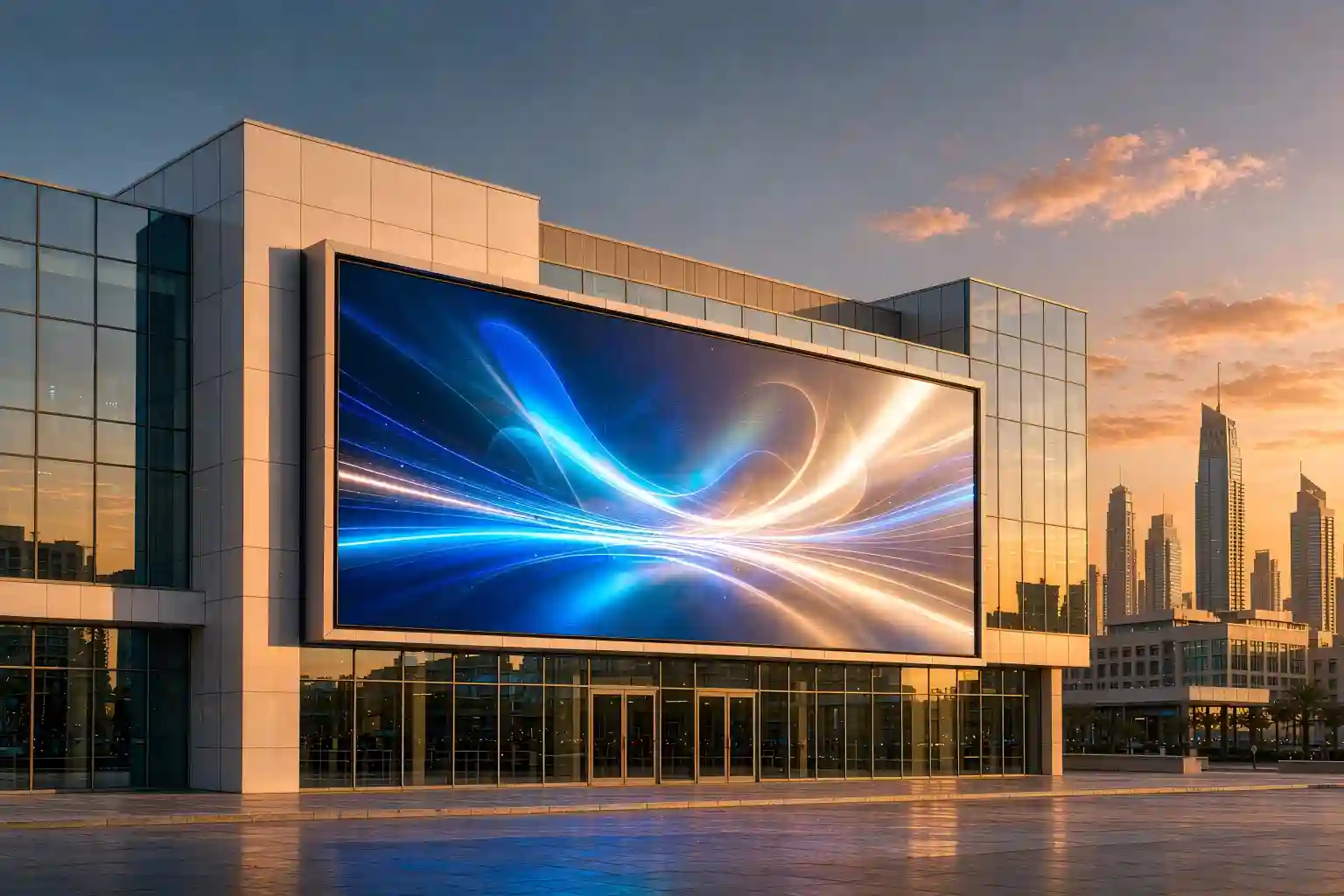
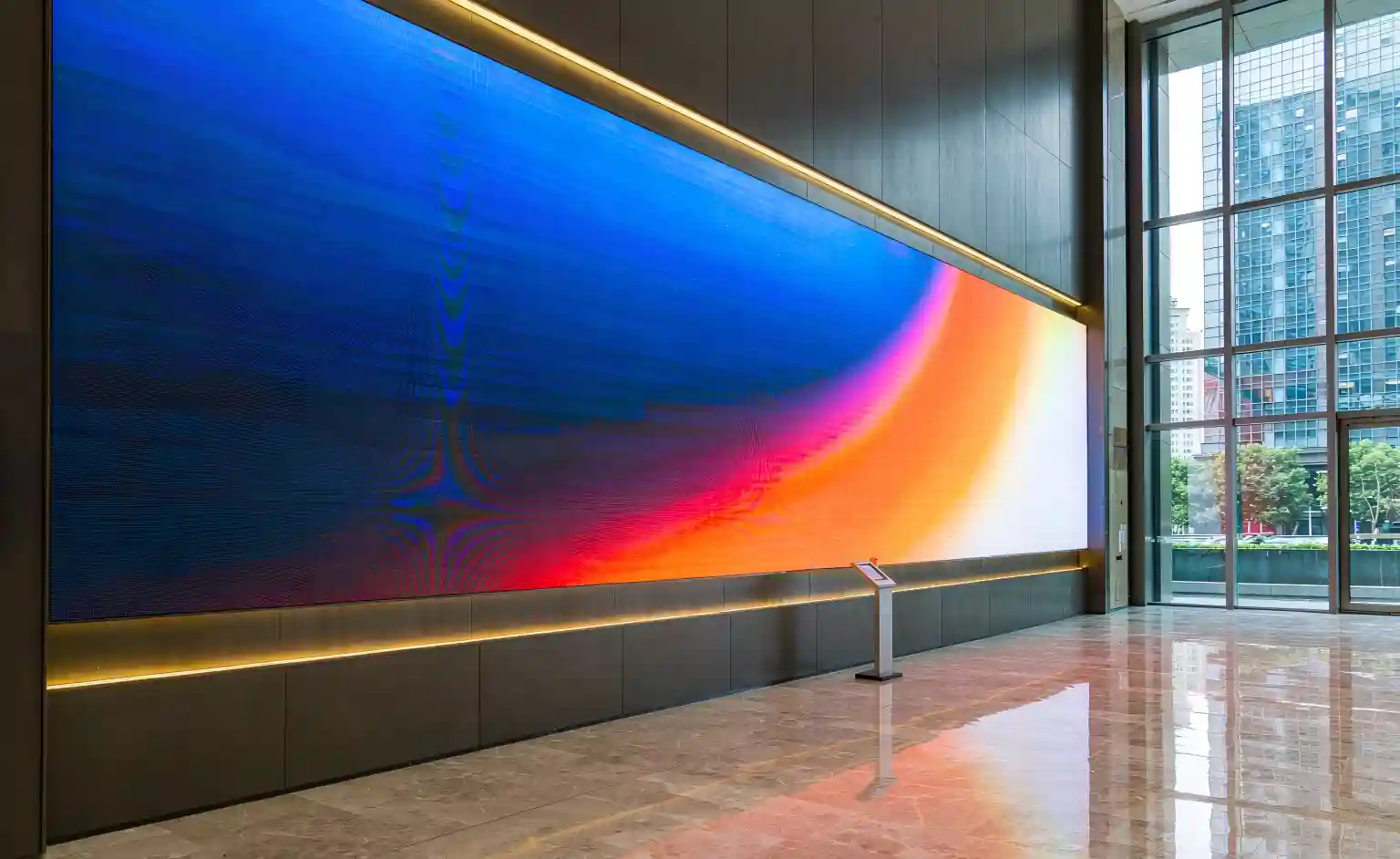
Showrooms need a wall that stops visitors in the first three seconds. Because COB packaging dissipates heat efficiently and produces thin, light panels, vendors can build stable curved, cylindrical, and custom-shaped video walls that projectors and LCD videowalls cannot match. Absen's multi-year collaboration with media artist Refik Anadol illustrates the ceiling of the format: from the immersive lighting installation in AKBANK's Istanbul headquarters lobby to the 2025 Zurich art space, COB canvases carry generative brand and art content with near-invisible seams. For B2B companies, a single seamless COB LED display running live operational data does more for visiting clients' perception of digital maturity than any slide deck.
Spec essentials: P1.2–P1.8 pitch, high-contrast black-face packaging, curved/custom cabinet support, show-control integration.
Projectors out, all-in-one COB in
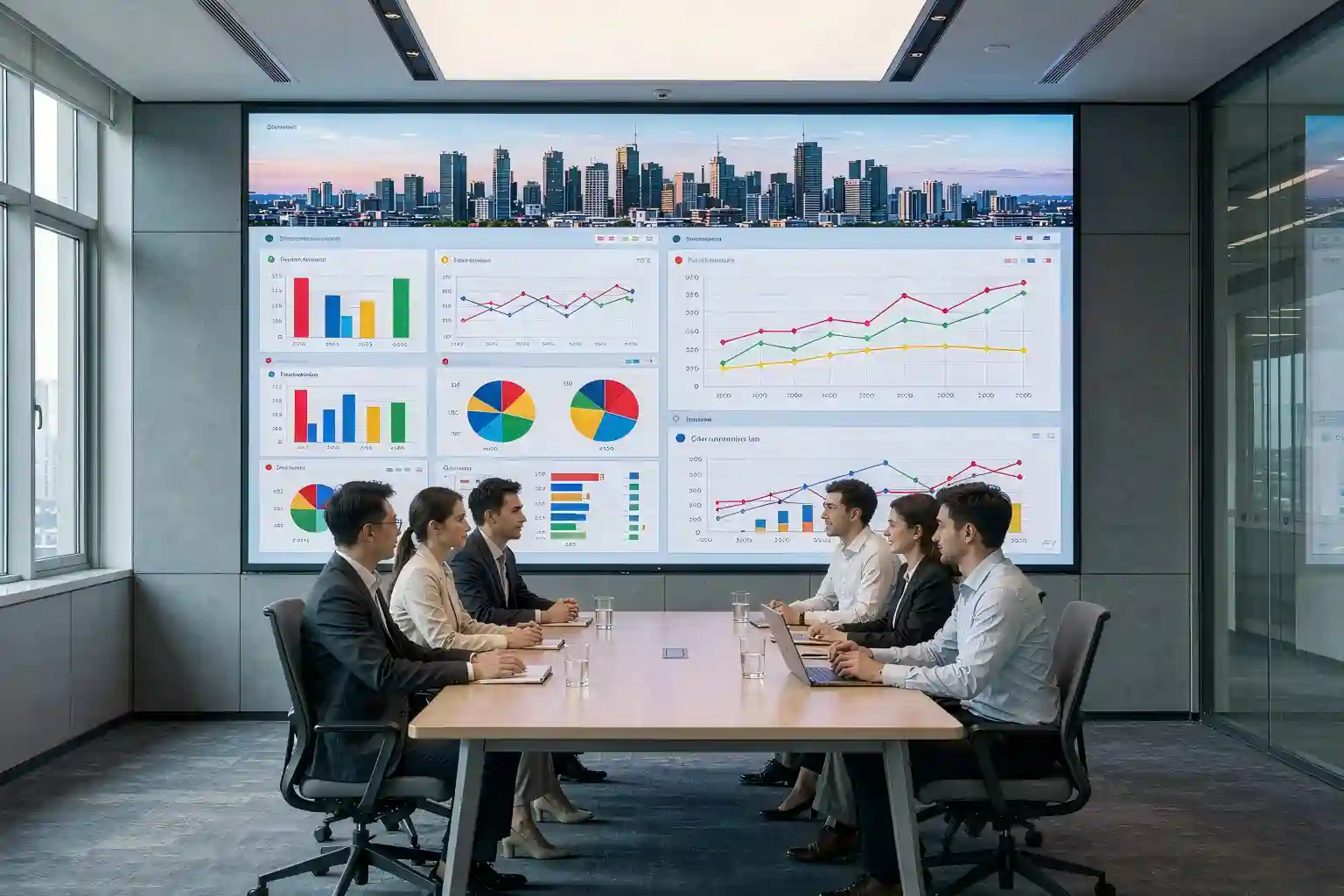
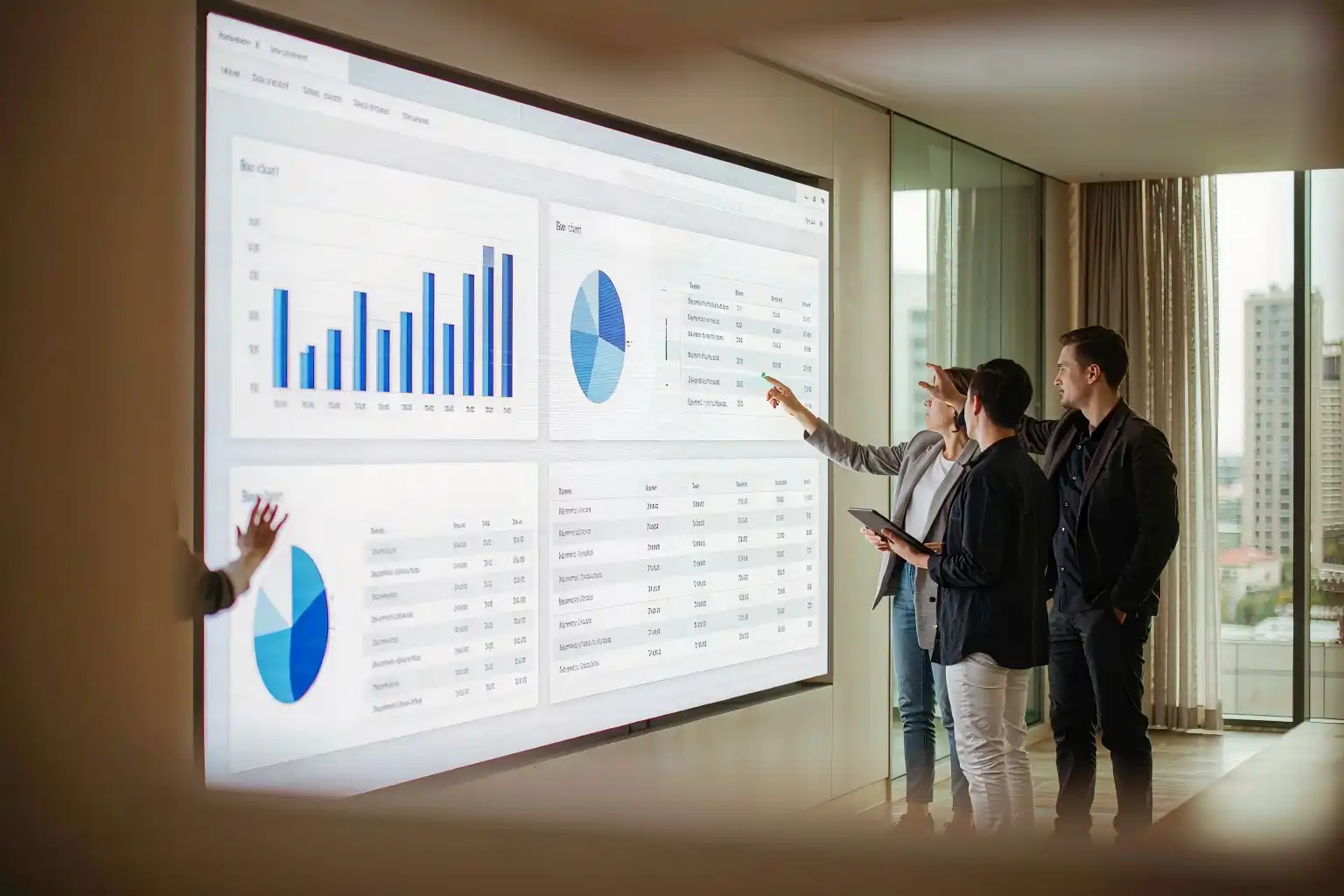
The premium meeting room is in the middle of a generational swap. DANACOID delivered a 0.93-pitch common-cathode flip-chip COB wall for Yancheng Urbanization Construction Investment Group — a state-owned enterprise with assets near RMB 45 billion — featuring 16:9 pixel-to-pixel mapping, die-cast aluminum seamless cabinets, hot-swappable front-maintainable modules, national low-blue-light certification, and fanless silent cooling for long sessions. On the product side, ViewSonic's 4K COB customizable all-in-one LED display launched at InfoComm India 2025 (0.9mm pitch, common cathode) cuts power draw by more than 40% and targets boardrooms that want a wall installed in a day, not a week. Compared with projection, a COB commercial display is immune to ambient light; compared with LCD videowalls, it has no bezels and sizes to the room. Facial detail in hybrid calls stays crisp, which quietly shortens every decision meeting.
Spec essentials: P1.2–P1.5, native 16:9 design, certified wireless casting / room-system compatibility, low-blue-light certification.
Walkable floors, record pixel counts, and the durability floor
Dataland, the world's first AI-art museum, opened in June 2026 inside Frank Gehry's The Grand LA in downtown Los Angeles — and it is the stress test the COB LED display industry will cite for years. More than 330 square meters of Absen COB panels span five galleries, including a floor screen visitors walk across as an AI model re-renders a rainforest in real time around their footsteps. The wall had to satisfy four conflicting requirements at once: no visible pixels at close range, structural endurance under continuous foot traffic, low enough heat output to coexist with roughly 930㎡ of server rooms, and the flexibility to follow Gehry's curved architecture. Flip-chip COB answered with roughly 3× conventional durability, about 50% lower failure rates, ~40% energy savings, and a total pixel count that set a record for integrated large-scale display projects. Cities building light shows, digital museums, and immersive planetarium-style venues are following the same blueprint.
Spec essentials: P1.5–P1.8, high refresh with low latency, GOB surface hardening for floors/interactive zones, humidity and dust protection.
From static posters to measurable sales lift
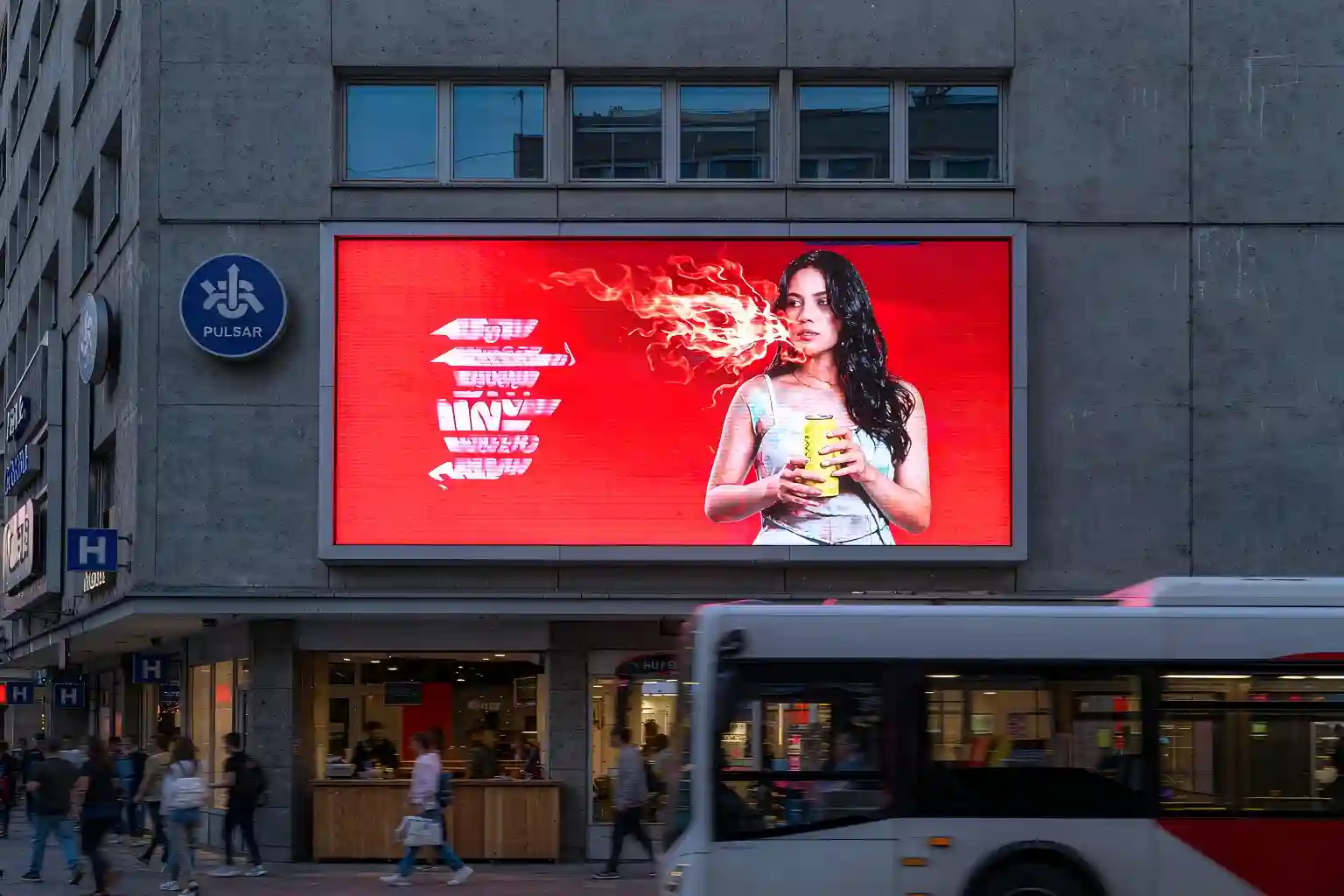
Retail is where COB commercial display spending converts most directly into revenue. When Auchan's European stores upgraded shop windows to dynamic LED displays, window advertising conversion rose 28%, average dwell time grew by 45 seconds, and each store saved more than RMB 120,000 per year in printed material costs — a format the retailer has since rolled out to 300+ stores worldwide. At scale, Yili's smart digital shelf program with AOTO deployed 5,000+ networked screens across 31 Chinese provinces, with centralized content management and regional scheduling reaching over 4.5 million households daily. Industry aggregation by Digital Signage Today puts average transaction value up 18–27% for retailers running intelligent LED programs, with digital ad positions earning 6–8× the revenue of traditional light boxes. COB's bump-and-wipe-resistant surface is a practical bonus in high-traffic aisles where discrete SMD lamps get damaged.
Spec essentials: P1.5–P2.5, 800–1500 nits, ≥3840Hz refresh (flicker-free on camera), CMS linked to POS/inventory data.

3. The Business Case: Brand, Engagement, and Cost — With Numbers
Brand equity: the wall is the first impression
A seamless command hub, a museum-grade digital canvas, an immersive flagship wall — a COB LED display signals digital maturity before anyone reads a word of copy. Survey data indicates brands with standardized digital signage enjoy roughly 32% higher customer loyalty than those relying on printed materials (Retail Customer Experience survey). In B2B sales environments, integrators consistently report that the showroom wall becomes the most-photographed asset on client visits.
Engagement and decision quality
Measured outcomes track the display upgrade directly: a European energy company's P1.2 COB control-room videowall cut operator errors by 40% thanks to sharper multi-source legibility (TrendForce 2025 display research case); curved LED in a Shanghai luxury retail zone lifted dwell time by about 40%; endcap digital displays in convenience and grocery settings raised featured-item sales by 59% and 22% respectively versus static print.
Five-year TCO: where COB actually wins
| Cost line | Conventional SMD / projection | COB LED display | Notes |
|---|---|---|---|
| Energy | Baseline | ~40% lower | Flip-chip common cathode; compounds over 24/7 operation |
| Failure rate | Baseline | ~50% lower | Chip-level encapsulation; no lamps to knock off |
| Maintenance | Scheduled lamp swaps, downtime | Front access + hot-swap modules | ~50% maintenance cost reduction reported |
| Service life | Visible lumen decay in 3–5 yrs | 100,000-hour class | Most premium deployments pay back within the wall's life |
Sources: Absen COB technology materials, LeyeDisplay 2025 indoor LED selection guide, published case reports. Actual figures vary by specification and duty cycle.
For a 20㎡ flagship zone, LED programs typically deliver 4× the annual foot traffic of static setups with payback inside 14–18 months — the "expensive to buy, cheap to own" logic that is driving standardization on COB.
4. Deployment Playbook: How to Buy a Commercial COB LED Wall Without Regrets
A five-step selection framework
- Match pitch to viewing distance. P0.9–P1.5 for close-range command and boardroom viewing; P1.2–P1.8 for showrooms and cultural venues; P1.5–P2.5 for retail. Never pay for pitch the room can't perceive.
- Match reliability to duty cycle. 24/7 sites need redundant power supplies, redundant receiver cards, and full front maintenance; interactive or floor applications need GOB hardened surfaces.
- Match refresh to content. ≥3840Hz wherever cameras are present; 7680Hz for surveillance-heavy command walls.
- Match cabinets to architecture. Curves, cylinders, and custom geometry must be locked with the vendor at design stage, not discovered at install.
- Award on five-year TCO, not unit price. Put energy, maintenance, and downtime cost into the comparison sheet before signing.
⚠️ Pitfalls that sink COB projects
- Spec-sheet inflation. Demand third-party test reports; verify brightness, contrast, and dead-pixel count on site before acceptance.
- Ignoring the signal chain. The panel is half the system — splicing controllers, signal redundancy, and control integration determine the lived experience.
- No spares agreement. COB modules are vendor-proprietary; lock spare-part availability and SLA response times into the contract.
- Zero content budget. Even the best COB LED display reverts to a poster within three months without a content refresh plan.
- Compliance blind spots. Verify data-security requirements for government projects and CE/UL certification for international rollouts.
Your next move
The commercial upgrade window is wide open: with COB past the 50% revenue share line, the supply chain, service networks, and pricing have all matured. The pragmatic path is a pilot in one flagship scenario — a command room or a signature boardroom — where real operating data validates your TCO model before fleet-wide rollout.
Get the Case Study Collection & Talk to a Deployment Specialist
Planning a command center, corporate showroom, boardroom, cultural venue, or retail display upgrade? Request the full COB LED display deployment case collection — specifications, site plans, and measured outcomes — and book a consultation covering site survey, solution design, installation, and long-term maintenance.
Get the Case Collection · Book a ConsultationSources: RUNTO, Ledman, Absen / AV Interactive / Installation International, ViewSonic, DANACOID, AET, Digital Signage Today, TrendForce, and published industry reporting. This article is for decision-support reference; actual project outcomes depend on site conditions, content operations, and maintenance quality.