How to Choose an LED Screen Cabinet Manufacturer: 7 Specs That Decide Your Five-Year Bill
Two suppliers quote the same pixel pitch, the same brightness and the same module size. Six months later one installation looks exactly like the sample you approved, and the other one already has a dark column, a warped frame and a maintenance crew that cannot reach the boards. The difference was never the pixel pitch. It was the cabinet.
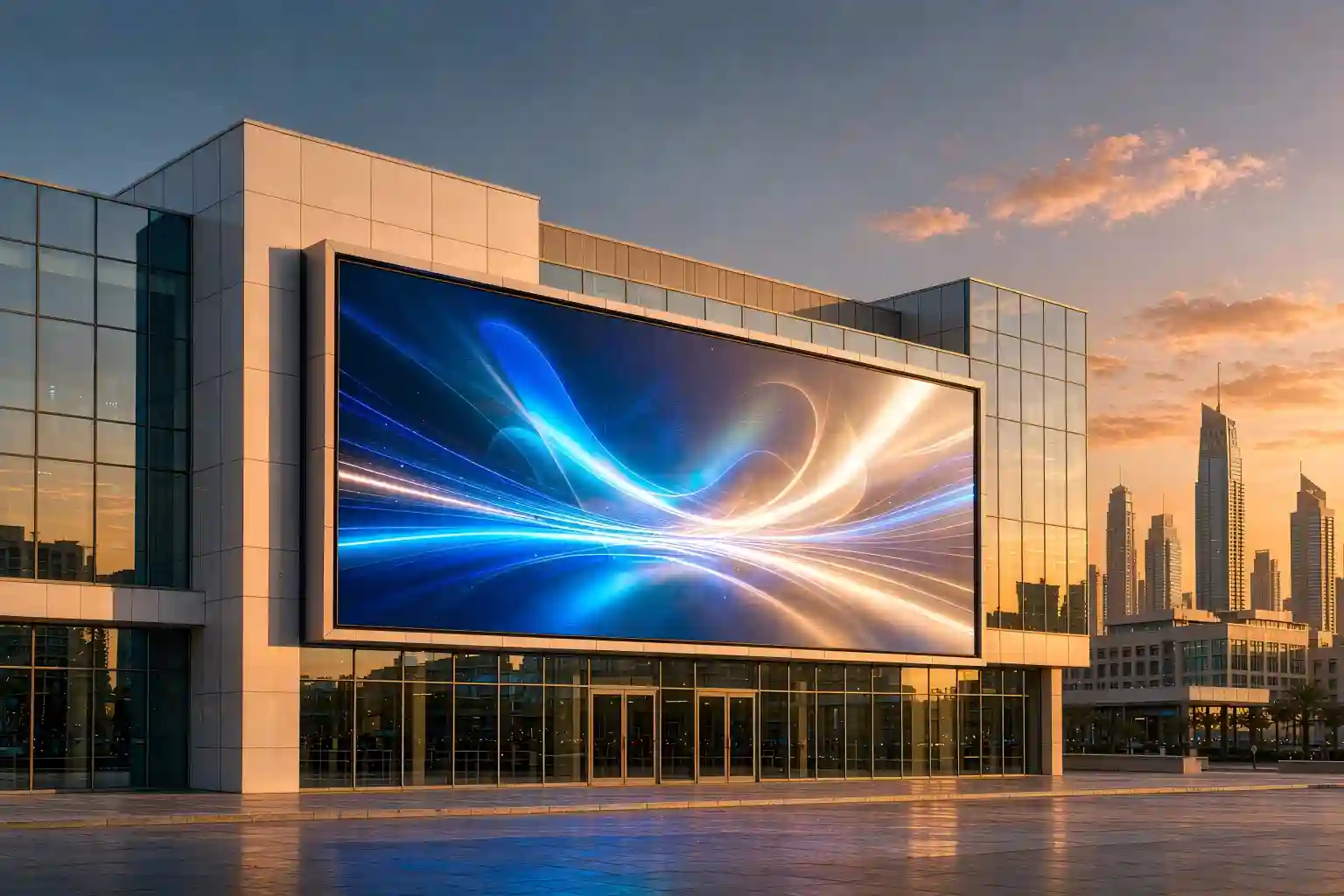
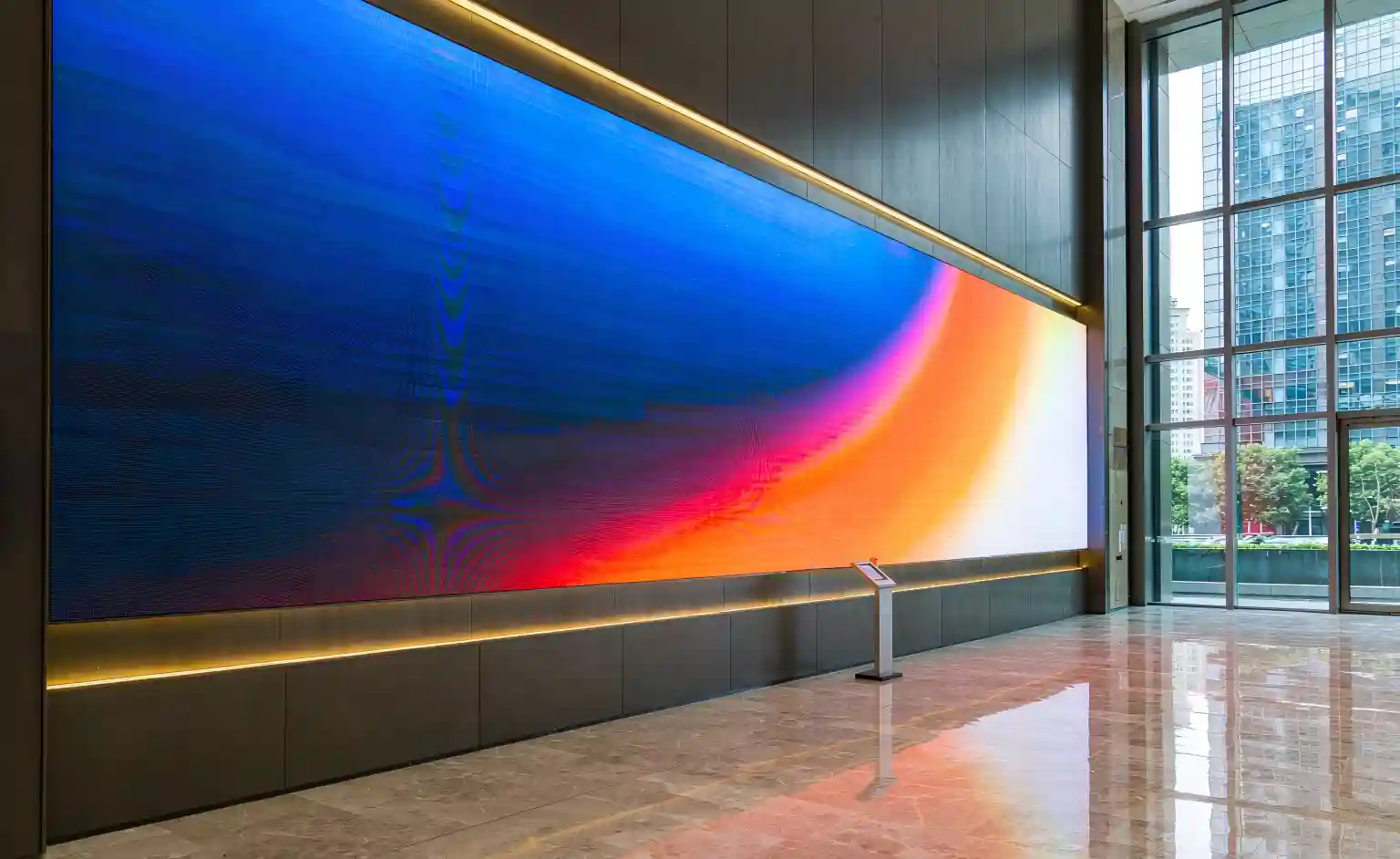
This guide is written for contractors, integrators and brand buyers who purchase LED display systems for advertising and want to know what to verify before the deposit leaves the bank. It applies to both an indoor LED wall and a large outdoor advertising screen, because the same cabinet decision sits behind every one of them.
1. Why the cabinet, not the pixel pitch, decides your result
When buyers compare quotes, they compare the parameters that are printed on the front of the catalogue: pixel pitch, brightness, refresh rate, resolution. Those numbers describe the image. They say nothing about whether that image will still look the same in year five.
The cabinet is the mechanical body that holds the modules, the power supply, the receiving card and the wiring. Every one of those components depends on it for alignment, cooling, protection and access. A weak cabinet does not fail dramatically. It fails slowly, and the symptoms show up long after the delivery has been paid for.
Three things the cabinet decides for you:
- Mechanical stability. A cabinet that twists under load pulls the modules out of alignment. The result is visible seams and uneven brightness across the whole wall.
- Thermal behaviour. The cabinet is the heatsink. If it traps heat, the power supply and the LEDs age faster and the colour drifts.
- Service access. Front or rear access decides whether a repair takes twenty minutes from a lift or a full crew and a crane.
The pattern to watch
Most LED display failures reported in the field are not LED failures. They are connection, power and sealing failures, and all three are cabinet-level design decisions.
2. What an LED screen cabinet actually is
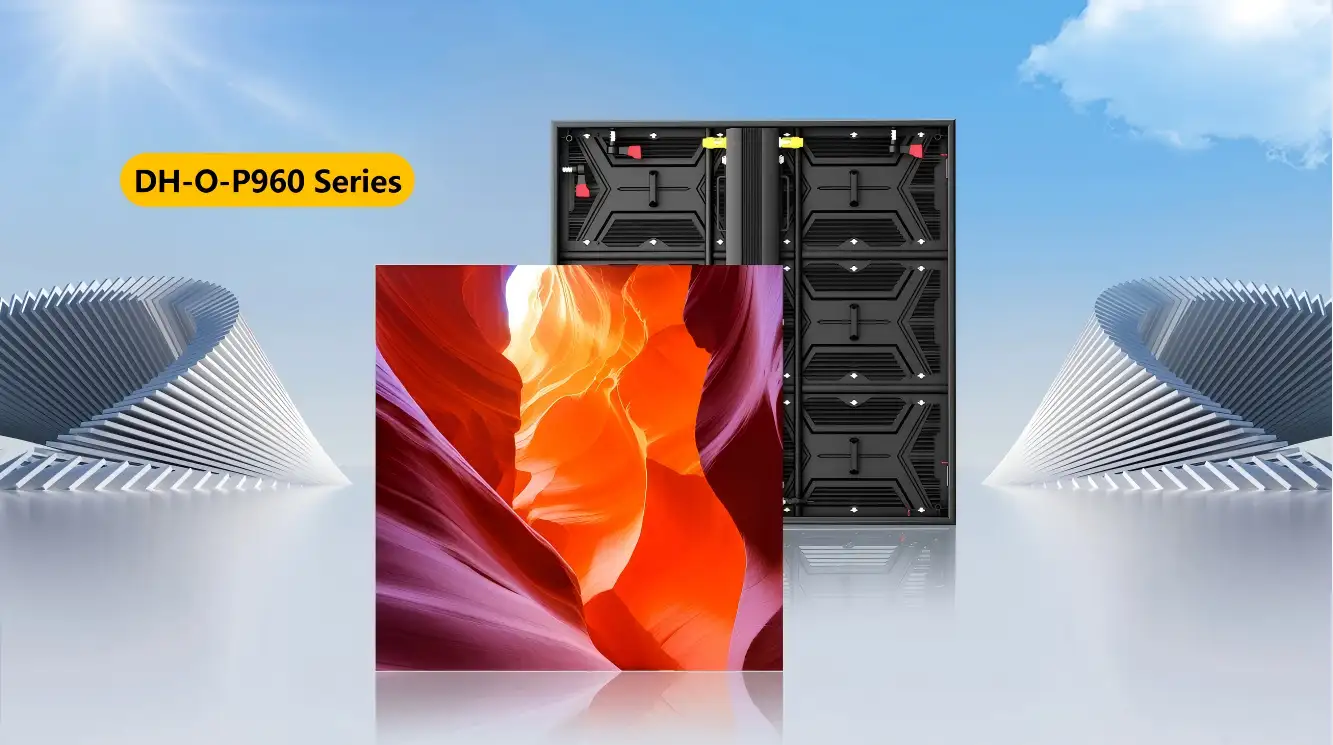
A cabinet, sometimes called a panel frame or a箱体 in Chinese sourcing documents, is the metal structure that groups a fixed grid of modules into one repeatable unit. Cabinets are designed to be bolted together edge to edge, so the wall is built from identical blocks rather than custom sections.
The five layers, from outside in
Module and front mask
Modules snap or screw onto the cabinet face. The mask protects the LEDs and defines the flatness of the visible surface.
Cabinet body and mounting frame
The structural shell. It sets module alignment, carries the wall load and holds the thread inserts that connect neighbouring cabinets.
Power supply
Converts mains AC to the low DC voltage the modules need. Its placement inside the cabinet decides the thermal profile of the whole panel.
Receiving card and hub board
Receives the video signal from the sending card and distributes it to each module. One bad connector here produces a whole dead zone.
Rear door, cable glands and seals
Often the cheapest part and the most common cause of water ingress, loose mains connections and callbacks.
Why this matters when you compare quotes
Two quotations can both read P3.91, 960x960 mm. One cabinet contains a 200 W supply in a sealed shell with a single cable gland. The other contains a 300 W supply with a louvered vent and two glands. The visible product is identical, the failure rate is not.
3. Why die-casting aluminum has become the default
There is an old sourcing rule that still holds: if a supplier cannot tell you what the cabinet is made of within one sentence, they are not the one who makes it. The body material is the single most useful signal of the engineering level behind the product.
| Material | How it behaves | Geometry accuracy | Thermal performance | Typical fit |
|---|---|---|---|---|
| Die-casting aluminum | Moulded in one piece, high rigidity at low weight | Best, sub-millimetre repeatability | Good, acts as its own heatsink | Indoor and outdoor advertising, rental |
| Sheet metal steel | Folded and welded, heavier and cheaper | Dependent on welding skill | Moderate, heavier mass eases heat spikes | Fixed indoor walls, tight budgets |
| Profile aluminum | Cut and assembled from extrusions | Acceptable but more joints to drift | Good | Bespoke shapes and oversized panels |
| Plastic composite | Light and low cost | Weak, deforms with heat | Poor | Only very light indoor signage |
Die-casting wins because the mould fixes the geometry instead of the welder. That matters for one practical reason: cabinets are almost never used alone. A wall of forty cabinets that each deviate by half a millimetre accumulates a visible break at the seam. Cast aluminium keeps the accumulated error inside the tolerance of the module connection.
4. The 7 cabinet specs that decide your five-year bill
These are the specifications worth writing into a purchase order. Each one has a question you can send to any LED screen cabinet manufacturer and a concrete answer you should receive.
Flatness tolerance
Ask for the flatness figure in millimetres, not the phrase “high precision”. Below 0.2 mm across a 500 mm module is the range that keeps a tiled wall visually seamless. This is the spec most often left out of a quotation and the one most visible to the end client.
Ingress protection for the real environment
IP65 on the cabinet is only meaningful together with the module rating, the cable gland type and the sealing method. For an outdoor LED advertising screen, ask for the test standard and the tested orientation, not just the two characters IP65.
Thermal design and power margin
Ask for the actual load on each power supply, not the nominal wattage. A supply running above roughly 80 percent of its rated output in a sealed cabinet will run hot and fail early. A well-designed cabinet leaves headroom.
Service access: front, rear, or both
This single decision changes your operating cost more than any other. Front access lets a single technician replace a module from the audience side. Rear access requires clearance behind the wall, which many facade projects do not have.
Connection repeatability
Ask how many mating cycles the power and signal connectors are rated for. If cabinets are unplugged and reconnected during installation and again during service, low-grade connectors loosen, and a loose connector becomes an intermittent dark panel.
Weight and hanging points
Cabinet weight per square metre decides the steel structure, the anchors and the crane. Get the number in writing before the structural drawings are frozen, because re-engineering the support after fabrication is expensive.
Spare parts policy
Confirm that modules, power supplies, receiving cards and the cabinet body itself remain available for at least five years, and get the spare ratio the manufacturer recommends in writing.
5. Where the money actually goes over five years
The purchase price is the most visible number in the procurement and the least important one in the budget. What determines the real cost of an LED screen cabinet is what happens after handover, and it splits into three lines.
Energy: the line item nobody quotes
A large advertising screen runs several hours a day for years. Cabinet design influences this through the efficiency of the power supplies, the airflow path and the brightness headroom the system needs to hit the specified output. An efficient cabinet can cut consumption meaningfully compared with an older design at the same brightness.
Service: front access versus crane access
If a cabinet only allows rear maintenance, every module replacement needs physical clearance behind the wall. On a facade or a high-mounted advertising structure that means a lift, a permit, and a crew. A front-access cabinet converts the same job into twenty minutes for one technician.
How to use this in a tender
Ask each supplier for the cabinet's power consumption per square metre at the specified brightness and for the maintenance method. Two numbers, and the cheapest quotation often stops looking cheap once they are on the same page.
6. Questions to send before you place an order
A short list of direct questions separates a trading company from a factory that owns its tooling. Send them in writing and compare the answers side by side.
Then add three that are about the factory rather than the product:
- Which certifications apply to the cabinet itself, and can you send the certificates rather than a logo?
- What does your routine ageing and burn-in test look like, and how long does each panel run?
- What is the actual production lead time for this cabinet, including the mould tooling?
7. Five red flags from a low-quality cabinet
Most problems appear in the first few months, and they all trace back to the cabinet rather than to the LEDs. This is the standard list to check during inspection or in the first thirty days after commissioning.
1. Visible seams between cabinets
The frame is not rigid, or the casting tolerance is loose. The wall cannot be made flat by re-tightening bolts, because the error is built into the geometry.
2. Dark panels or columns that come and go
Usually a connector or receiving card issue. If it moves when you tap the cabinet, the mating force is too low and it will keep coming back.
3. Power supply failures in the first year
The clearest symptom of a cabinet that runs its supplies too close to their rating, or that cannot get rid of heat.
4. Water stains and corrosion inside an outdoor cabinet
Sealing is only as strong as its weakest gland. Once water is inside, the damage is progressive and warranty claims usually turn into an argument about installation.
5. Colour and brightness drift across the wall
Uneven thermal load between cabinets. One panel runs hotter, ages faster, and no longer matches its neighbours after a year of operation.
8. Key takeaways
| Item | What to check | Why it matters |
|---|---|---|
| Cabinet body | Die-casting aluminum, own mould, ribbed rear | Sets alignment, rigidity and thermal path |
| Flatness | Below 0.2 mm across a 500 mm module | The audience sees seams, not datasheets |
| Ingress protection | IP65 or better, tested both faces | Water ingress is progressive and hard to claim on |
| Power margin | Load kept well below the rated output | The main driver of supply failure in year one |
| Service access | Front access preferred on facade projects | Converts a crane visit into twenty minutes |
| Connectors | Rated for repeated mating cycles | Prevents intermittent dark panels |
| Weight | Per square metre, confirmed in writing | Drives the steel structure and the crane |
| Spares | Five-year availability and spare ratio | Protects the display for its whole service life |
| Ageing test | Documented burn-in before shipment | Moves failures from your site back to the factory |
Frequently asked questions
Q1: What should I check first when choosing an LED screen cabinet manufacturer?
Start with the cabinet body material and its flatness tolerance. Those two answers determine whether the finished wall can be made seamless and how well it will survive thermal cycling. Pixel pitch matters for the image, but it will not tell you whether the wall still looks correct in year five.
Q2: Is die-casting aluminum always better than sheet metal for an LED display cabinet?
For advertising installations, usually yes, because casting holds its geometry and acts as its own heatsink. Sheet metal steel is acceptable for fixed indoor walls on a tight budget, but it weighs more and its accuracy depends on welding consistency rather than on a mould.
Q3: How important is IP65 for an outdoor LED advertising screen?
The rating is only meaningful when it describes the whole assembly. Ask for the tested rating of the cabinet, the modules and the cable entries together, and ask whether both the front and the rear face were tested. An IP65 label on the cabinet alone says very little about an installed screen.
Q4: Why does front maintenance access cost more, and is it worth it?
Front access needs extra mechanical design inside the cabinet, so the unit price rises slightly. It is usually worth it on facade projects and any installation where the rear of the wall is inaccessible, because it replaces a lift, a permit and a crew with a single technician working from the front.
Q5: How do I compare cabinet price per square metre between suppliers?
Normalise the quotation before comparing. Ask every supplier for the same pixel pitch, the same brightness, the same cabinet material, the same maintenance method and the same spare parts package, in writing. A lower unit price usually means a lighter frame, a tighter power margin or a shorter spare parts commitment.
Need a cabinet specification you can put in a tender?
Send us your project scenario, target pixel pitch and installation environment. We will come back with the cabinet specification, the power and signal configuration and the spare parts list you need to compare suppliers properly.
Request the cabinet specificationThis article is an original technical summary prepared for LED display buyers. Figures given for power consumption, flatness and protection ratings are typical industry ranges used to illustrate how specifications differ; the values for your project must always be confirmed against the manufacturer specification sheet and site measurements.
© LED Display Buyer Guide. Written for contractors, integrators and brand buyers sourcing LED display systems for advertising.