What Is an Outdoor Fine Pitch LED Display? A Buyer's Guide to P2.5-P4
What do P2.5, P2.97, P3, P3.91, and P4 actually mean — and how do they differ from traditional outdoor LED walls? A plain-English guide to outdoor fine pitch LED displays, the specs that matter, and how to match pixel pitch to viewing distance.
- Why your outdoor screen looks "unwatchable"
- What an outdoor fine pitch LED display is
- Key differences vs traditional outdoor screens
- 5 specs you can actually use
- When fine pitch is a must — and when it isn't
- Pitfalls and practical recommendations
1. Why Your Outdoor Screen Looks "Unwatchable"
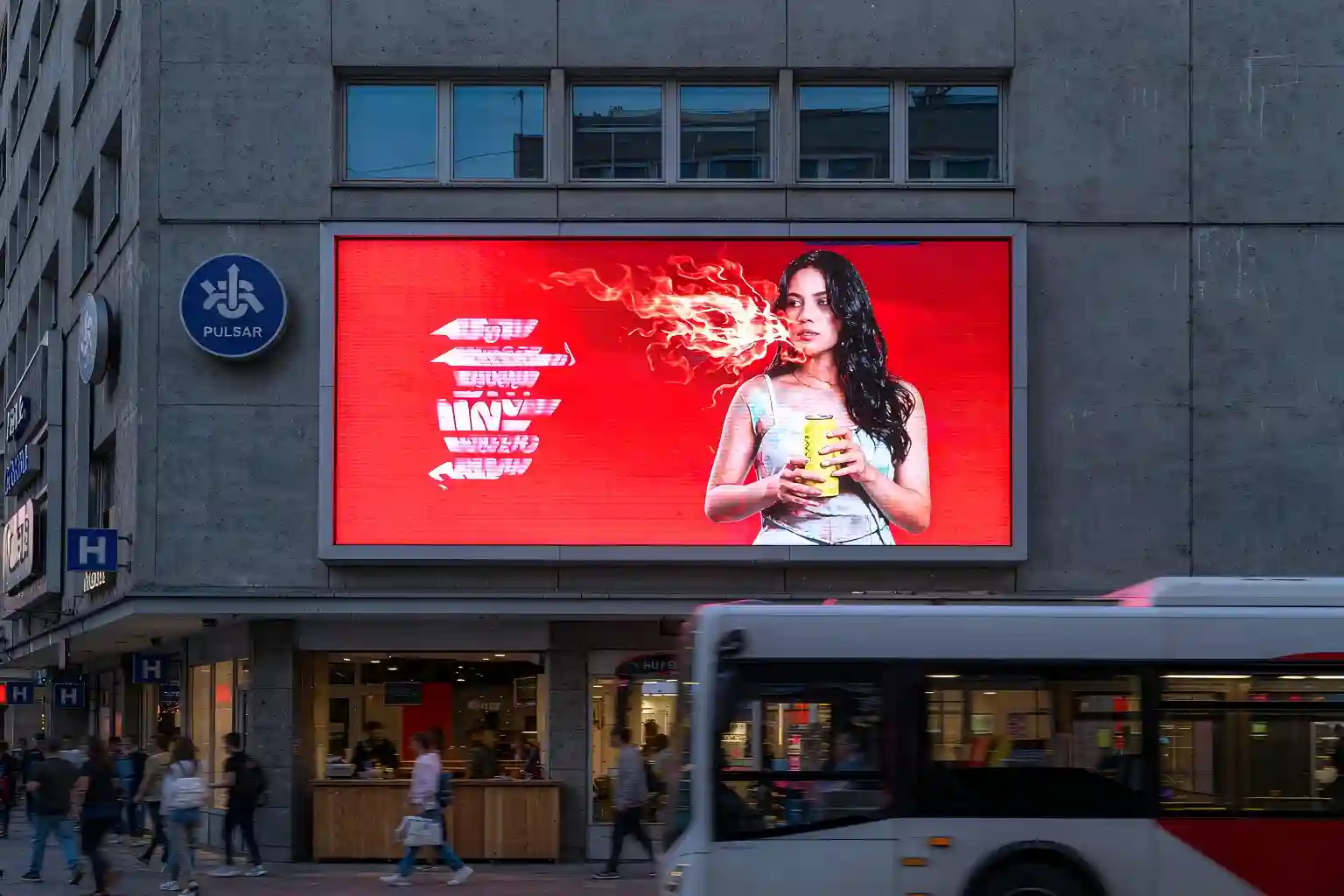
Familiar scenes: the screen washes out in sunlight, up close it is nothing but pixel grit, a promo video turns faces into color blocks, and within a year color shifts and dead pixels start to appear. The problem is rarely "a bad screen" — it is usually the wrong pixel pitch chosen from day one.
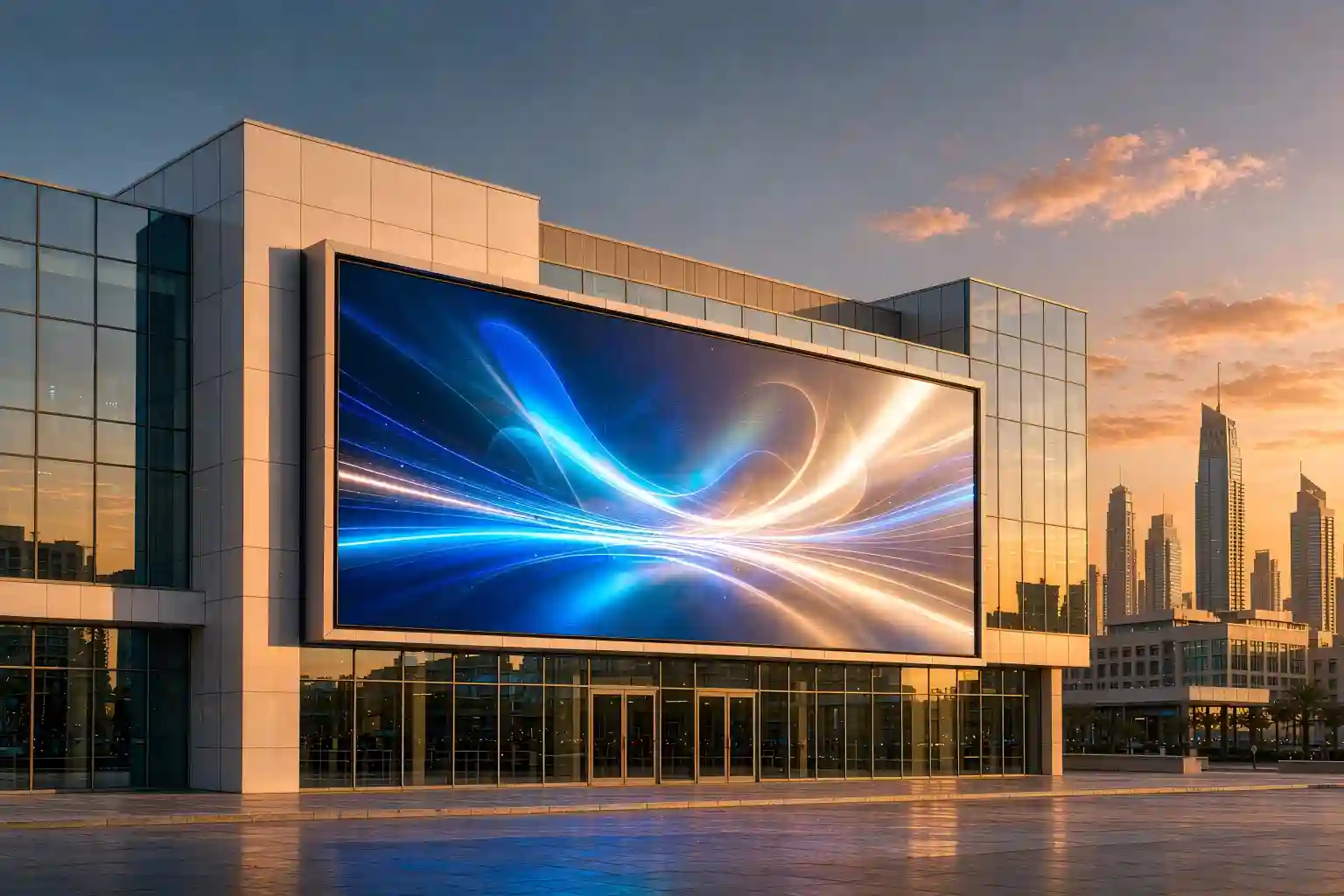
Traditional outdoor walls (P5/P6/P8/P10) are built for distance. They look fine from tens of meters away, but the moment crowds walk past, the grit is a turn-off. That is exactly the gap outdoor fine pitch LED displays were created to fill.
2. What an Outdoor Fine Pitch LED Display Is
"P" stands for pixel pitch — the distance in millimeters between the centers of two adjacent pixels. P2.5 means 2.5mm spacing: the smaller the number, the more pixels per area, the finer the image. A COB LED display mounts LED chips directly onto the PCB and coats the whole surface, giving natural resistance to humidity, heat, and impact — the mainstream choice for outdoor fine pitch.
2.1 Traditional outdoor screens vs fine pitch: where they differ
| Dimension | Outdoor Fine Pitch (P2.5-P4) | Traditional Outdoor (P5/P6/P8/P10) |
|---|---|---|
| Pixel density | 62,500-160,000 pixels/㎡ | 10,000-40,000 pixels/㎡ |
| Closest viewing distance | Sharp from 2-4 meters | Visible grit under 6 meters |
| Content | HD video, promos, live streams, graphics | Big text and simple animation from afar |
| Refresh rate | ≥3840Hz, flicker-free on camera | Often 1920Hz, banding on video |
| Color uniformity | COB seamless, minimal color shift | Module-to-module shift grows over time |
| Role | Premium display, close-range crowds | Landmarks, rooftop advertising |
3. Core Advantages: Built for Close-Range Crowds
4. The Only 5 Specs You Really Need
2. Brightness: south/west sun-exposed spots need ≥5500 nits; shaded or semi-outdoor sites do fine with 3500-4500 nits. Inflated brightness claims are common — ask for a test report.
3. Refresh rate: ≥3840Hz. Mandatory if content will be photographed or streamed.
4. Ingress protection: IP65 minimum (dust + water spray); coastal areas should go IP66 with conformal coating.
5. Density & power draw: density sets the sharpness ceiling; COB fine pitch typically consumes less than traditional screens at equal brightness — the electricity saving adds up.
5. When Fine Pitch Is a Must — and When It Isn't
6. Pitfalls and Practical Recommendations
Pitfall 2: Indoor screens sold for outdoor use. Cheap "fine pitch" with indoor SMD construction fails sun and rain protection — dead LEDs in bulk after one summer.
Pitfall 3: Vague refresh-rate claims. Any quote that says "high refresh" without a number needs follow-up. For camera content, verify ≥3840Hz.
Pitfall 4: Panel-only pricing. Sending cards, receiving cards, power supplies, steel structure, and installation labor must all be in the budget — low quotes reappear in the accessories.
Not Sure About the Pitch? Get a Free Calculation
Send your installation site, viewing distance, and budget — get a free pitch recommendation, size calculation, and full quote, plus references from similar projects.
Get a Free Selection PlanFrequently Asked Questions
Is a smaller P value always better?
No. Match the pitch to your closest viewing distance: P2.5/P2.97 for 2-3m, P3/P3.91 for 3-5m, P4 or even P5/P6 beyond 5m. Smaller pitch only costs more — the eye won't notice beyond what the distance needs.
Why choose COB packaging for outdoor fine pitch?
COB mounts chips directly on the PCB and coats the entire surface, delivering far stronger protection against humidity, sun, and impact than traditional SMD LEDs. It also means fewer dead pixels, a seamless look, and better color uniformity — the mainstream outdoor fine-pitch process.
How much more does outdoor fine pitch cost than traditional screens?
Per square meter, fine pitch costs more. But if your viewers are within 5 meters, a traditional screen cannot do the job at all. Compare total cost for achieving the same close-range clarity, not bare unit prices.
What brightness does an outdoor fine pitch display need?
South- or west-facing sun-exposed positions: ≥5500 nits. Shaded or semi-outdoor corridors: 3500-4500 nits is enough. Overly bright screens waste power and hurt the eyes — set brightness by orientation, not by habit.