LED Screens for Advertising: How to Buy One That Actually Performs
The same "LED screen for advertising" behaves like two different products — one in a shopping mall atrium, another on a rooftop facing the highway. Here's how to match screen to venue before you sign, so your budget lands where it earns.
- Why half of many advertising-screen budgets is spent in the wrong place
- Match the venue first: four ad scenarios, four different specs
- Pixel pitch and viewing distance: one table that settles it
- Brightness isn't "the more the better": power, light pollution, compliance
- Protection, cooling and lifespan: the real bar for outdoor screens
- A six-step decision flow from requirement to acceptance
- Key takeaways + FAQ
1. Why half of many advertising-screen budgets is spent in the wrong place
Every year we talk with agencies and contractors sourcing LED screens for advertising, and the same story keeps coming back: the screen is installed, the brightness spec looks great, the price was negotiated hard — and three months later the operator is unhappy. The picture washes out at noon. Stand too close and the image breaks into visible dots. The power bill is higher than projected. Retrofit budget gets approved.
What went wrong? Most buyers compared exactly two numbers before signing: price per square meter and peak brightness. But the commercial value of an advertising screen comes from one question — can the audience, at the real viewing distance and the real time of day, see and remember the content? That question is answered by venue fit, pixel pitch, brightness management, protection and acceptance testing. Only after those five are agreed does price mean anything.
2. Match the venue first: four ad scenarios, four different specs
The same LED screen faces a completely different pass/fail line depending on where it lives. Before signing anything, answer three questions: where does the audience stand, how long do they look, and do they see the screen by day or by night?
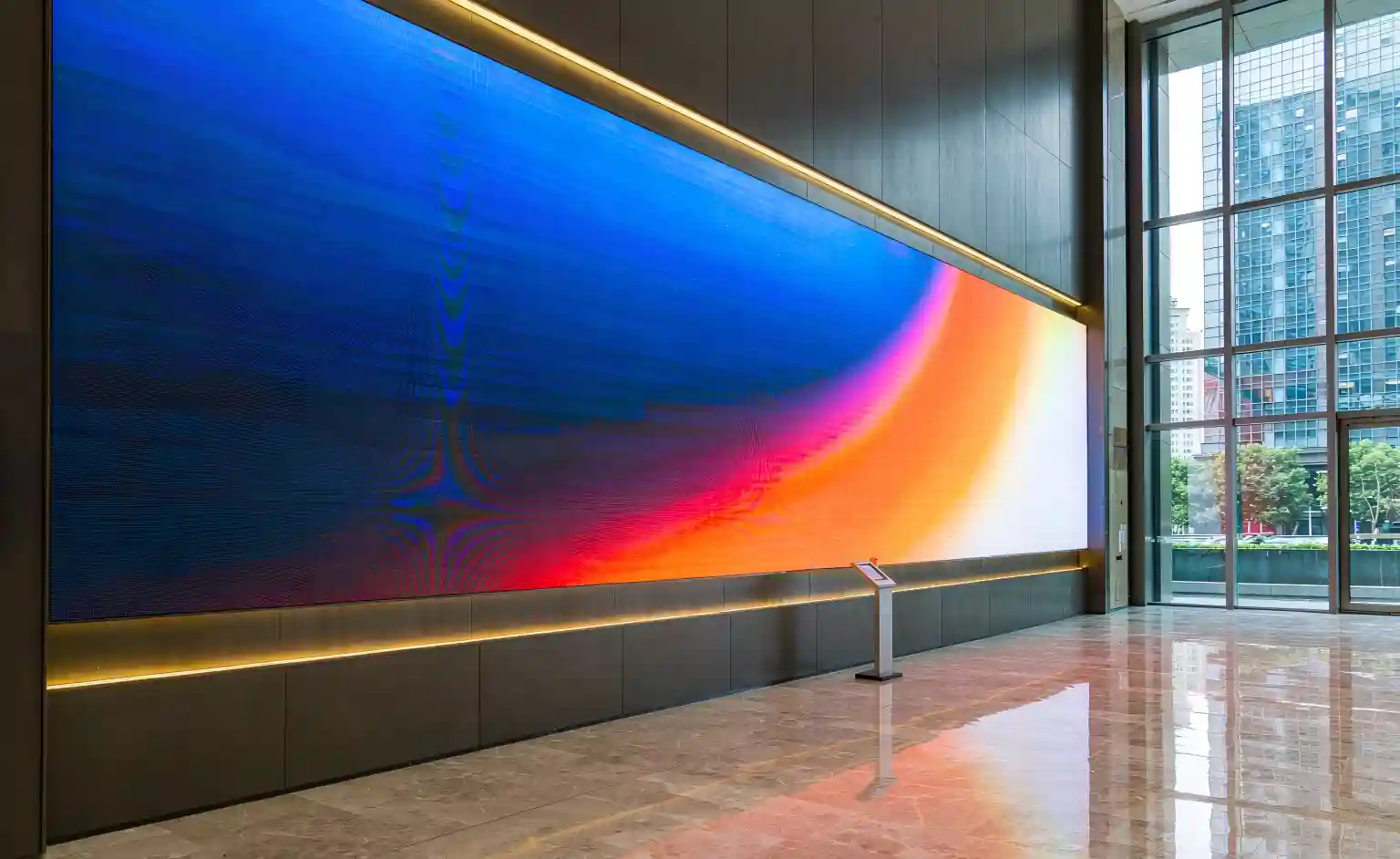
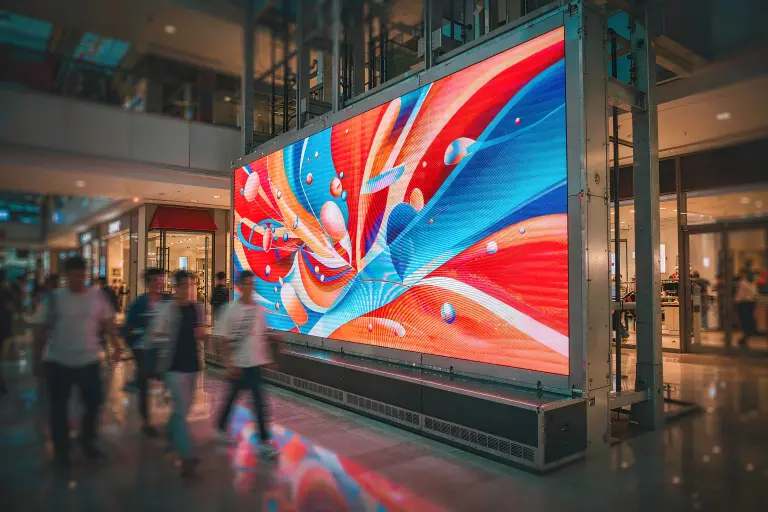
Viewing distance 3–10 m, heavy traffic, short glances. P1.8–P2.5 pitch; 800–1,200 nits is plenty. Prioritize color uniformity and low reflection over extreme brightness.
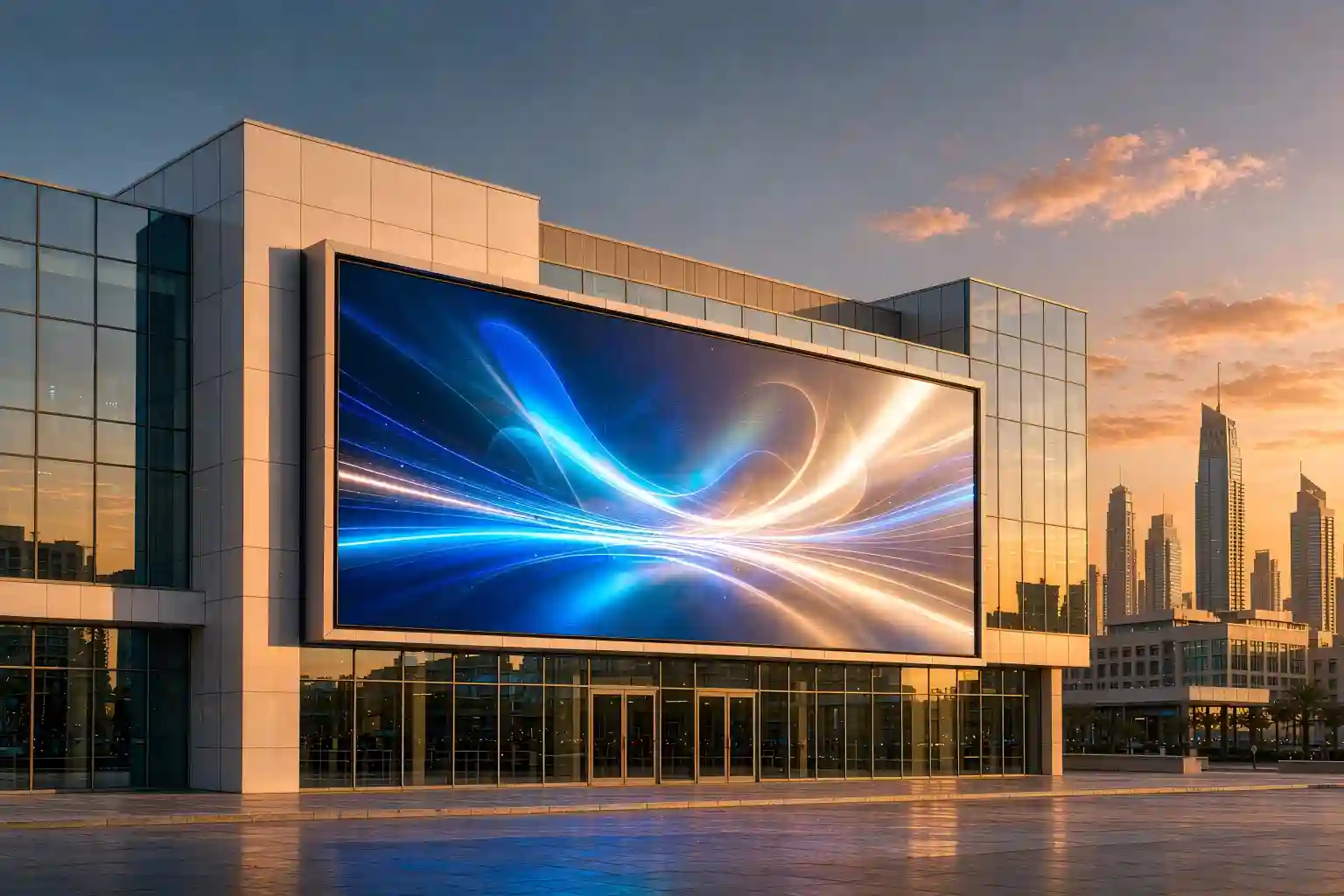
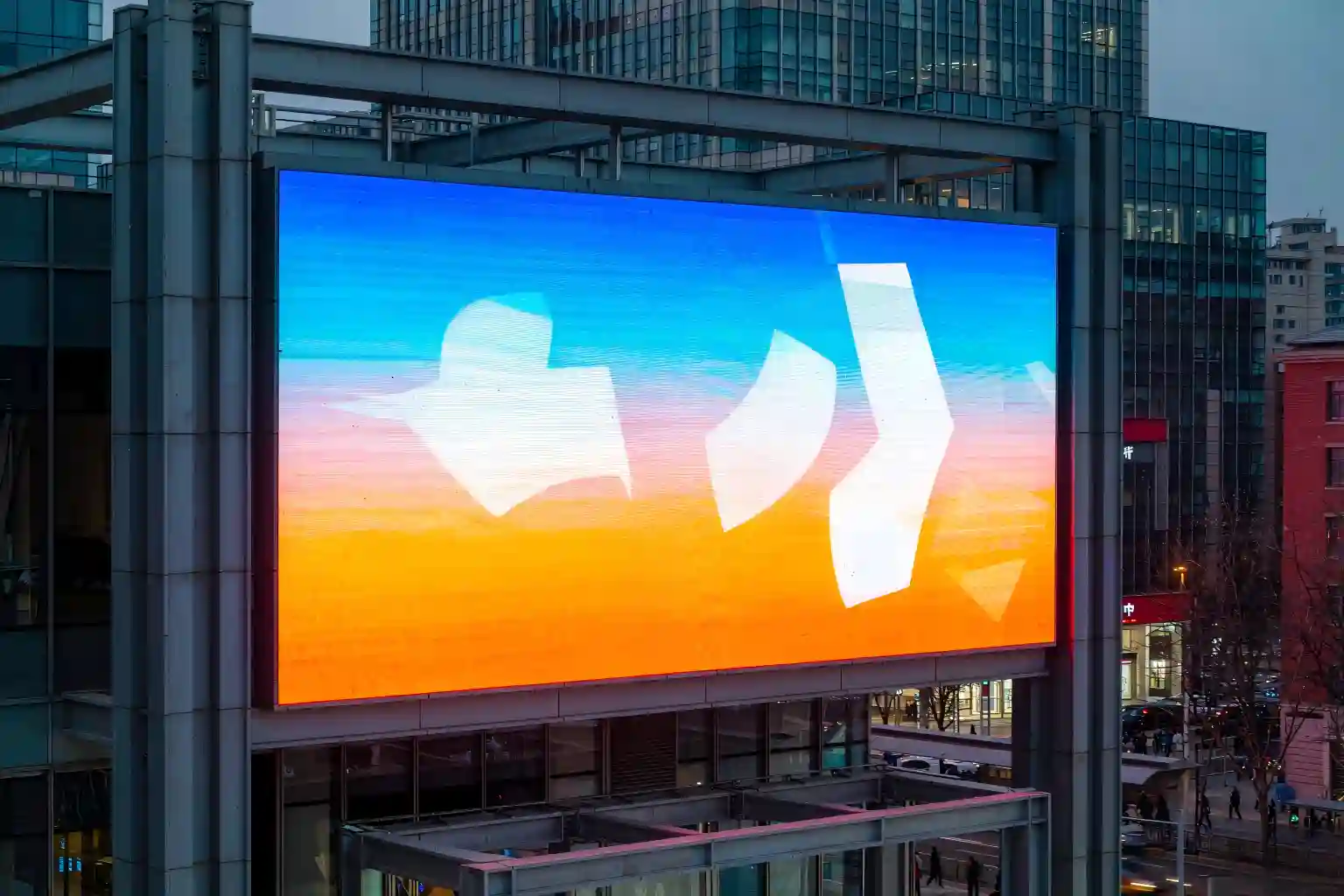
Viewed from 30 m and beyond, running around the clock. P4–P10 pitch is the economical pick; you'll need 4,500–6,000 nits to punch through midday sun.
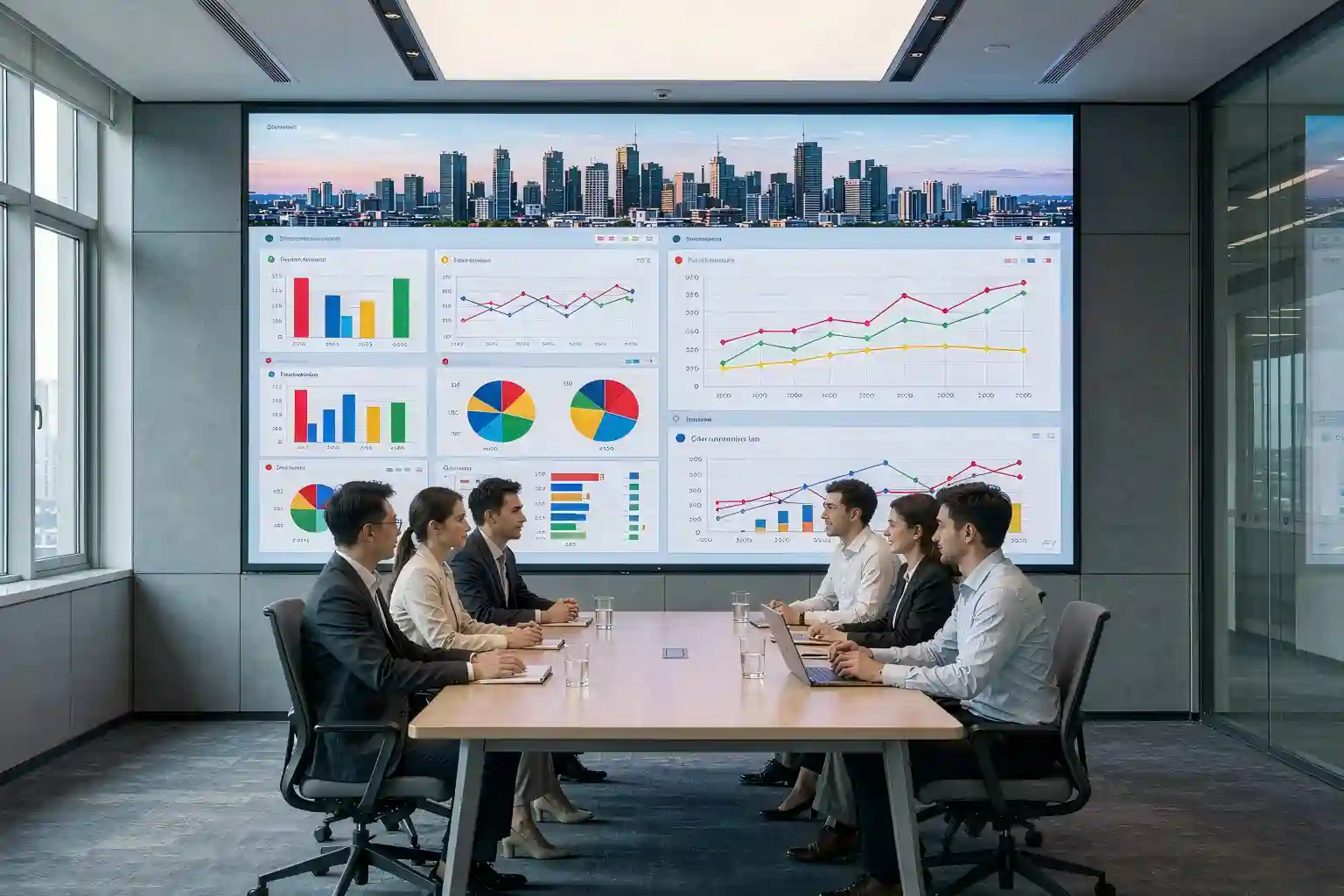
1–3 m viewing distance, often behind glass. Choose P1.2–P1.8 high-density screens; manage glass reflections and heat. Brightness 600–1,000 nits — image quality defines the brand.
Audiences move fast and glance briefly. Content is dynamic, so 3,840 Hz refresh or higher to avoid banding on camera; 1,500–2,500 nits, and don't skimp on dust and moisture sealing.
A classic mistake: installing a premium indoor screen on a semi-outdoor entrance canopy — the picture looks foggy by day. Or the reverse: a high-brightness outdoor billboard inside a meeting room, where all anyone remembers is the glare. Venue mismatch tops the complaint list for advertising screens.
3. Pixel pitch and viewing distance: one table that settles it
Pixel pitch is the distance between the centers of two adjacent pixels, in millimeters. It is the single parameter that decides whether your screen looks smooth or dotted. The industry rule of thumb: minimum viewing distance (meters) ≈ pitch number (mm), with a comfortable viewing distance at roughly 2–3× that.
| Pixel pitch | Minimum viewing distance | Typical use | Where you see it |
|---|---|---|---|
| P1.2–P1.5 | ≥1.5 m | Shop windows, premium retail, close-range brand display | Chain stores, showrooms |
| P1.8–P2.5 | ≥2.5 m | Mall atriums, meeting rooms, airport check-in halls | The indoor advertising workhorse |
| P3–P4 | ≥4 m | Lobby columns, stage backdrops, semi-outdoor canopies | Traffic entry points |
| P5–P6 | ≥6 m | Street-level facades, small outdoor ads | Neighborhood retail |
| P8–P10 | ≥10 m | Landmark buildings, highway-side billboards | City-scale media |
Read the table the other way, too: if your audience stands 8 meters away, a P1.5 fine-pitch screen buys you nothing they can perceive. Pitch is bought for distance, not for prestige.
4. Brightness isn't "the more the better": power, light pollution, compliance
Many buyers treat peak brightness as the only hard spec. In reality brightness is a double-edged sword. An outdoor LED billboard genuinely needs 5,000+ nits to hold its own against noon sun — but if it keeps playing at daylight brightness after dark, the power bill doubles and light-pollution complaints follow, which in a growing number of cities can complicate permits.
Mature installations use automatic brightness adjustment: an ambient-light sensor steps the screen through brightness tiers — full brightness by day, 10–20% at night. Three direct benefits:
- Meaningfully lower energy consumption over the screen's life (exact savings depend on your playback schedule);
- Fewer night-time complaints, lowering the risk of being asked to retrofit;
- Slower degradation of LEDs and power supplies, so the screen holds value longer.
5. Protection, cooling and lifespan: the real bar for outdoor screens
Indoor screens compete on image quality; outdoor screens compete on survival. An outdoor LED screen for advertising lives with sun, rain, dust, temperature swings and storms. Three factors decide whether it still performs in year five.
Three things to verify on any outdoor screen
1. Ingress protection, IP65 minimum. Front-side IP65 means dust-tight and protected against water jets. The sealing work at module-to-cabinet seams and cable entries matters more than the number itself; in coastal or high-rainfall regions, confirm the rear-panel thermal design as well.
2. Cooling determines degradation speed. LED lumen decay and power-supply aging both track temperature directly. A well-engineered screen keeps operating temperature rise in a sane range using fans or airflow channels. Ask for a thermal log after two hours at full load — it tells you more than a demo loop ever will.
3. Lightning protection and water management. Rooftop and open-area installations need a grounding/lightning scheme and a drip edge above the cabinet. These two items are the most commonly omitted from quotations and the first to surface during storm season.
6. A six-step decision flow from requirement to acceptance
The first five sections compress into one flow. Send it to whoever owns the project and walk the steps in order — price negotiations go much better when the groundwork is already done.
7. Key takeaways + FAQ
| Topic | One-line takeaway |
|---|---|
| Buying order | Venue → pitch → brightness → protection → cost. Reverse the order and budget leaks. |
| Pixel pitch | Minimum viewing distance (m) ≈ pitch (mm). Pitch is bought for distance, not prestige. |
| Brightness | 4,500+ nits for outdoor noon sun, with auto-dimming to 10–20% at night. |
| Refresh rate | 3,840 Hz or higher when the screen will be filmed, to avoid camera banding. |
| Protection | IP65 minimum outdoors; judge sealing work, airflow and thermal logs, not just the label. |
| Acceptance | 72-hour burn-in + dead-pixel sampling + measured brightness uniformity before final payment. |
Frequently asked questions
Q1: How much does an LED advertising screen cost per square meter?
Price is driven by pixel pitch, LED brand, cabinet construction and brightness class — the spread for the same square meter can be several-fold. Don't start with unit price: lock the venue and viewing distance first, ask suppliers to quote a complete screen package, then compare configurations line by line.
Q2: How bright should an outdoor LED advertising screen be?
In direct midday sun you typically need 4,500–6,000 nits to keep the content punchy. At night, an ambient-light sensor should step brightness down to 10–20% of daylight level — that balances energy cost, light-pollution compliance and screen lifespan.
Q3: What pixel pitch suits a shopping mall atrium screen?
Viewing distances usually run 3–10 meters, so P1.8–P2.5 is the mainstream choice: sharp imagery and good color, at a far more sensible cost than ultra-fine pitches.
Q4: What should an LED advertising screen acceptance test cover?
Three essentials: a 72-hour continuous burn-in to catch dead LEDs and artifacts, sampled brightness-uniformity measurements, and — for outdoor screens — sealing and thermal behavior under full load. Hold the final payment until these pass, and write a spare-parts list into the contract.
Send us the installation location, viewing distance and budget range. Within 48 hours you'll get a complete screen proposal — pitch, brightness, structure and itemized pricing — plus an acceptance checklist you can attach to the contract.
Get a Free Screen ProposalThis article is an original technical overview. Figures are typical industry ranges; actual values depend on project specifications and on-site measurement. Images are illustrative.