Export Practice · Buying Guide
How to Choose the Right LED Screen Display — A Practical Guide for Global Buyers
Ask five suppliers to quote "the same" LED screen and you may see a 3x spread. The difference is rarely quality alone — it is how well each configuration matches your scene. This guide gives you a five-step method, so you know exactly what to ask and what to compare before you sign.
Contents
1. A Costly Lesson: The Cheapest Quote That Cost Twice
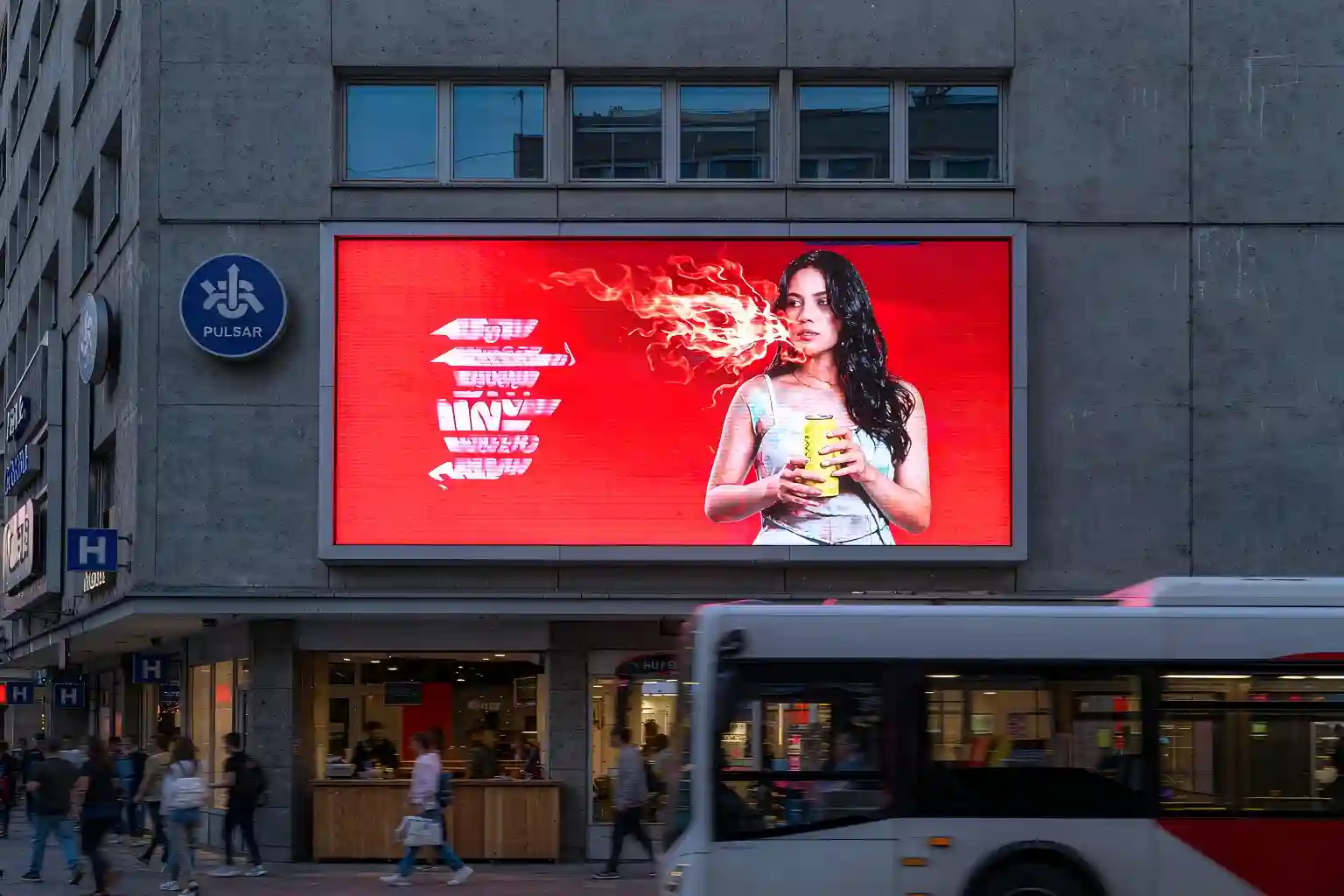
Last year we worked with a retail-chain buyer who had two quotes for an in-store display and chose the one 28% cheaper. Within three months, the project needed two costly corrections. Up close, the image looked grainy — the pixel pitch was one class too large for the viewing distance. In daylight, the picture washed out — brightness had been configured as "just enough." Worst of all, the cabinets were rear-service while the wall behind the screen was load-bearing: no access for maintenance, so the screen came down and the project started over.
The supplier wasn't cheating. The purchasing process simply skipped one step: translating the use case into specifications. An LED screen display is not about the highest specs or the lowest price — it pays off when parameters match the scene.
2. The 5 Specs That Speak Every LED Screen Display Buyer's Language
No matter which country your supplier is from, every quotation hinges on the same five variables. Learn them once, and you can negotiate with any factory on equal terms.
1. Pixel Pitch
The distance between the centers of two adjacent LEDs, in millimeters. Smaller number = finer image = higher price. Rule of thumb: closest viewing distance (m) ≈ pitch (mm). A P2.5 screen shouldn't be viewed much closer than 2.5 m.
2. Brightness (nits)
Indoor screens typically run 600–1,500 nits; outdoor installations need 5,000+ (typical ranges). More is not better: excess brightness wastes power and glares, while too little looks gray in ambient light.
3. Refresh Rate
1,920 Hz is the pass mark. If the screen will ever be filmed — storefronts, stages, livestreams — choose 3,840 Hz or higher, or the camera will pick up scan lines.
4. IP Rating
Outdoor: at least IP65, sealed front and rear. Indoors, IP43 is usually enough. Poolsides, seaside and high-humidity sites demand the strict end of the scale — don't save money here.
5. Packaging (SMD / COB / GOB)
How LEDs are built onto the board decides reliability and looks. SMD is mature and cost-effective; COB is a sealed face-source design for fine pitch and close viewing; GOB adds a protective resin layer over SMD for impact resistance — common in rental and interactive installs. Full comparison in Section 4.
3. A 5-Step Process: From Requirements to Specifications
Memorizing specs is step one. Real selection is an ordered decision flow where each step narrows the field — whatever is left at the end is your configuration.
Step 1 — Define the application. Indoor fixed, outdoor fixed and rental are three different product lines: cabinets, protection and brightness systems don't transfer. Fix the scene first, because every later parameter depends on it.
Step 2 — Measure the viewing distance. A tape measure beats any datasheet. The closest position an audience can stand decides your pixel pitch class — and most of your budget with it.
Step 3 — Set brightness and refresh rate. Ambient light sets brightness; "will it be filmed?" sets refresh rate. Together they decide whether the screen reads clearly at noon and looks clean on camera.
Step 4 — Check environment and service. Rain, dust and temperature swings set the IP rating. Then confirm the maintenance mode: if there is no access behind the wall, you must have front-service cabinets. This is the requirement buyers forget most often.
Step 5 — Budget for total cost. Compare quotes with identical specifications, then decide on 5-year total cost (Section 5) — never on unit price alone.
4. Match the Screen to the Scene
Here is the flow translated into a matching chart. Find your application row and you have a working configuration in seconds.
SMD vs COB vs GOB: Which Package Fits?
| Package | Structure | Key Strength | Typical Use |
|---|---|---|---|
| SMD | Individual LED lamps mounted on the board | Mature process, best cost-performance | Standard-pitch indoor screens, classic outdoor screens |
| COB | Chips encapsulated directly onto the PCB | Face-source light, strong protection, low dead-pixel rate | Fine-pitch indoor, close long-hour viewing |
| GOB | SMD with a transparent resin coating | Impact-resistant, moisture-proof | Rental stages, touch and interactive installs |
Indoor vs Outdoor: Three Hard Differences
First, brightness: outdoor starts at 5,000 nits, while over-speccing an indoor screen only adds glare and power bills. Second, protection: outdoor demands IP65 sealing and a fuller thermal design. Third, viewing logic: outdoor audiences glance in motion, so go bigger text and higher contrast; indoor audiences watch for hours, so image quality and comfort come first.
5. Think Beyond the Price Tag: The 5-Year Total Cost
A 30% price gap can flip over five years. The true cost of an LED screen display has four components — and unit price is only one of them:
Power
Brightness and power-supply efficiency drive consumption. An outdoor screen running 12+ hours a day can rack up a five-year electricity difference bigger than the gap between two quotes.
Spares & Service
Front-service cabinets remove the need for rear access — and the building work it implies. Dead-pixel warranty terms decide what you will spend on LED replacement in years three to five.
Freight & Installation
For export projects, cabinet weight and count are money: ocean freight is billed by volume and weight. Cabinets 20% lighter are a real discount, not a brochure line.
Warranty & Resale Value
A screen built with brand LEDs and documented warranty terms holds resale value far better. Get warranty coverage written into the contract, not promised in a chat window.
6. Key Takeaways
| Takeaway | Remember This |
|---|---|
| Pixel pitch | Closest viewing distance (m) ≈ pitch (mm) |
| Brightness | Indoor 600–1,500; outdoor 5,000+ nits (typical) |
| Refresh rate | 3,840 Hz+ if the screen will be filmed |
| IP rating | IP65+ outdoors; IP43 usually fine indoors |
| Packaging | SMD standard, COB fine pitch, GOB impact-prone sites |
| Comparing quotes | Full BOM + warranty, then 5-year total cost |
| Selection order | Scene → distance → specs → total cost |
7. FAQ: Questions Buyers Ask Most
Q1: Is a smaller pixel pitch always better?
No. Pitch sets the minimum viewing distance and drives the budget: smaller pitch means finer detail and higher cost. Measure the closest viewing distance first, then apply the rule "distance (m) ≈ pitch (mm)" so you never pay for resolution your audience can't see.
Q2: Can an indoor LED screen display be used outdoors?
Not recommended. Outdoor installations need 5,000+ nits brightness, IP65 sealing, stronger heat dissipation and structure. An indoor screen will look washed out in daylight and degrade quickly under rain and temperature swings.
Q3: How do I choose between SMD, COB and GOB?
Choose SMD for standard pitches and balanced budgets, COB for fine pitch, close long-hour viewing and high reliability, and GOB for rental, touch or impact-prone environments. None is universally best — match the package to the scene.
Q4: Why do quotes for the same LED screen display differ so much?
Differences come from LED brand, packaging, power supplies, cabinet material, refresh rate and warranty terms. Ask suppliers for a full BOM and warranty period, then compare on 5-year total cost of ownership instead of unit price alone.
Send Us Your Project — Get a Configuration in 48 Hours
Share your viewing distance, installation environment, screen size and budget range. Our export team will reply with a recommended configuration, a reference quote and a full BOM.
Get Free Selection AdviceOriginal technical content written for LED display export buyers. All figures are typical industry ranges; actual values depend on project specifications and on-site measurements. Reproduction with attribution is welcome.