LED Billboard Cost: What Really Drives the Price per Square Meter
Two suppliers quote the same 6 × 3 m outdoor LED billboard. One says 11,000 USD, the other 26,000 USD. Both call it “P6 outdoor”. That gap is not a negotiation trick — it is the sum of five decisions you can specify yourself. Here is how LED billboard cost is actually built, what a realistic price per square meter looks like, and how to compare quotes so a low price does not turn into an expensive screen.
What this guide covers
1. Why the same size can cost twice as much
Most LED billboard cost discussions start with the price of the screen. That is the wrong starting point. An outdoor LED billboard is not a single product — it is a display, a steel structure, an electrical installation and a service plan sold as one number. When two quotes for the same 18 m² billboard differ by 15,000 USD, the difference is almost always hidden in specifications that were never written down.
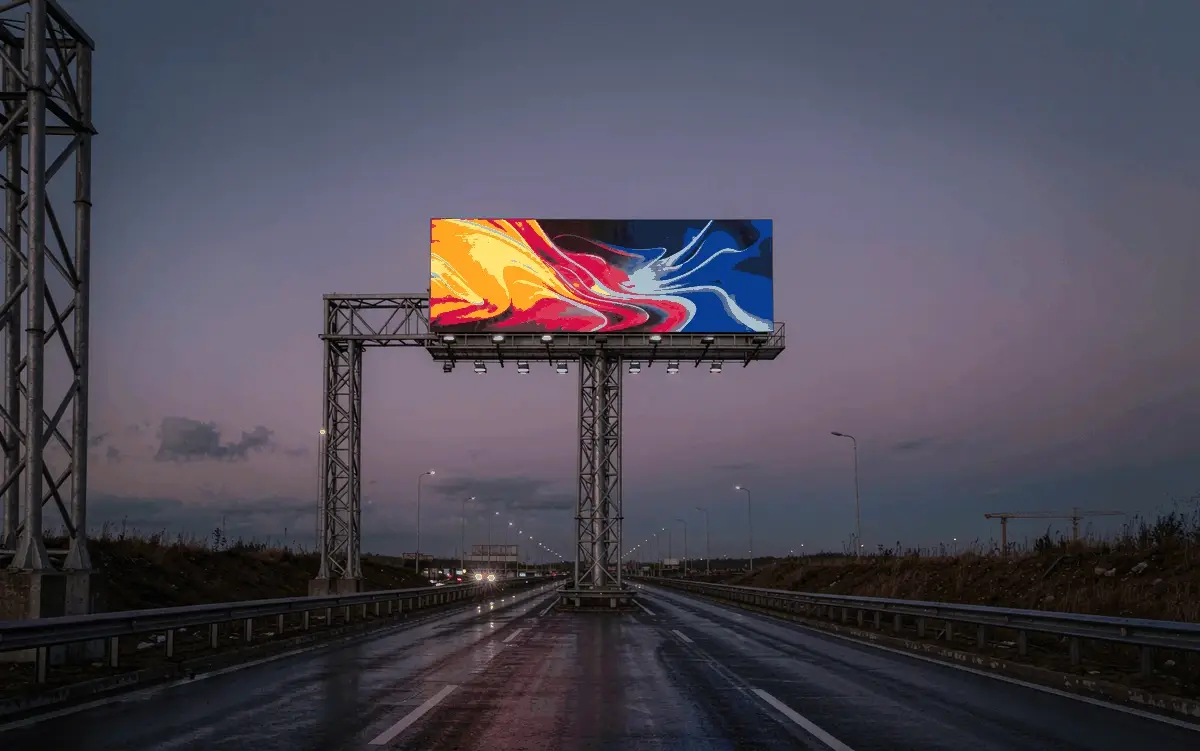
Under the label “P6 outdoor”, five things can still change completely:
- LED lamp brand and binning. Mixed-bin lamps are cheaper, and the colour shift only becomes visible after 12–18 months.
- Driver IC. Generic drivers work on day one; they decide refresh rate, low-brightness greyscale and failure rate later.
- Cabinet material and sealing. Painted steel, aluminium and die-cast cabinets differ in weight, flatness and how well they keep rain out.
- Power supply. A derated branded PSU costs more up front and is usually the cheapest part of the project over five years.
- Warranty and spare parts policy. Two years versus three years, and whether 3–5% spare modules ship with the container.
Rule of thumb: compare LED billboard cost line by line, never as one lump sum. If a supplier cannot send a bill of materials (BOM) per cabinet, the quote is not comparable yet.
2. What LED billboard cost actually includes
Installed cost splits into six blocks. The shares below are typical for an outdoor fixed billboard project — they are indicative, not a quotation, and they move with pixel pitch, structure height and site conditions.
Reading the six blocks
- Modules and driver ICs (about 50%). The largest and most negotiable block. Pixel pitch, lamp brand and driver grade are decided here.
- Cabinet and power supply (about 15%). Cabinet material and IP65 sealing quality, plus the power supply brand and derating margin.
- Control system (about 8%). Sending card, receiving cards, video processor, media player and the software that runs your content schedule.
- Steel structure (about 15%). Gantry, columns, foundation and wind-load calculation. Higher structures and higher wind zones raise this share quickly.
- Installation (about 7%). Crane or boom lift, electrical wiring, commissioning and calibration on site.
- Logistics and duty (about 5%). Packing, inland transport, sea freight, insurance and import duties at destination.
Important: all figures in this article are typical market ranges for illustration, not a firm quotation. Your final outdoor LED billboard price depends on the specification you approve, the site, the quantity and the exchange rate on order day.
3. Typical LED billboard cost per square meter
Buyers usually ask two questions: how much does an LED billboard cost and what is the LED billboard cost per square meter. The honest answer is a range, because a square meter of P10 and a square meter of P4 are different products. The table below shows indicative FOB China ranges for outdoor fixed installation.
| Configuration | Typical use | LED billboard cost per m² (USD) | Approx. price per sq ft |
|---|---|---|---|
| Outdoor P10, standard cabinet | Highway billboard, viewed from 10 m or more | 600 – 900 | ≈ 56 – 84 |
| Outdoor P8, SMD, 6,000 nits | Roadside billboard in cities and suburbs | 750 – 1,100 | ≈ 70 – 102 |
| Outdoor P6, SMD, 7,000 nits or more | Urban roadside, traffic passing at 4–8 m | 950 – 1,500 | ≈ 88 – 139 |
| Outdoor P4–P5, high refresh | Premium city corner, close viewing or camera capture | 1,400 – 2,300 | ≈ 130 – 214 |
| Indoor / rental P2.5–P3 (reference only) | Not a billboard, shown to explain the pitch effect | 1,800 – 3,200 | ≈ 167 – 297 |
If you prefer imperial units, the same ranges work out to roughly 56–297 USD per square foot of outdoor screen, because the LED billboard price per square foot is simply the per-square-meter figure divided by 10.76.
Three notes that change the number more than any negotiation:
- Scope. These ranges cover the display system. Steel structure, foundation, installation and destination charges are normally quoted separately and can add 25–40% to the project.
- Quantity. LED billboard cost per square meter falls as area grows, because the control system is a fixed cost spread over more modules.
- Currency. Most Chinese LED display manufacturers quote in USD, FOB Shenzhen or Ningbo. Ask whether the price is fixed for the production window, because a 30–60 day lead time carries exchange-rate risk.
4. Five variables that move your quote
4.1 Pixel pitch: the single biggest lever
Pixel pitch is the distance between two LED pixels, measured in millimetres. Halve the pitch and you need roughly four times as many LEDs per square meter. That is why LED billboard cost rises almost as a square function when you move from P10 to P5.
Match the pitch to the viewer, not to the catalogue. The usual rule is that pixel pitch in millimetres should be no more than the closest viewing distance in meters. A highway billboard read from 10 m or more performs just as well at P8 or P10 as an expensive P4 — at roughly half the cost and half the power consumption.
4.2 Brightness and lamp quality
Outdoor screens need 6,000–10,000 nits to stay readable in direct sunlight, and brightness is achieved by driving the LED harder. Higher brightness usually means a better-grade lamp and a bigger power supply, both of which raise cost. Cheaper lamps reach the same nits when new but lose brightness faster, which is why two screens look identical in the showroom and different after two summers.
4.3 Cabinet material and IP65 sealing
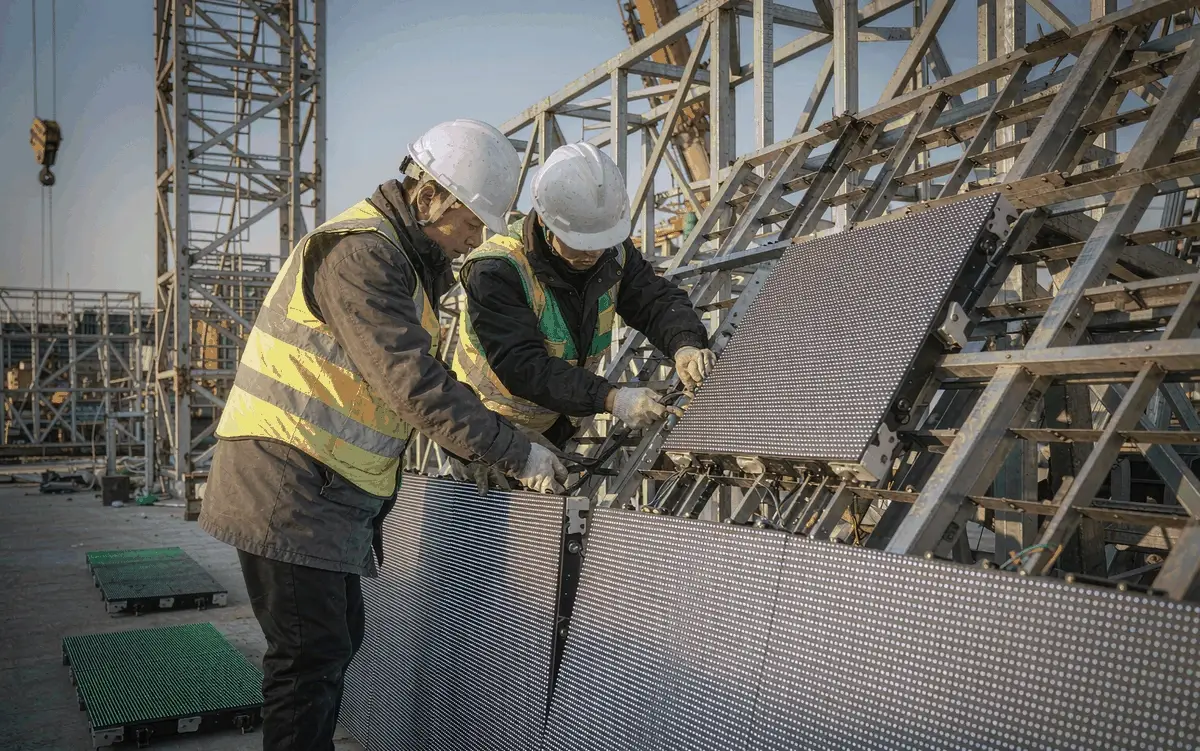
Painted steel cabinets are the cheapest and the heaviest. Aluminium saves weight on high structures. Die-cast aluminium gives the best flatness and heat dissipation. For any outdoor billboard, confirm IP65 on the front and IP65 on the rear of the cabinet, and ask how the module gasket is tested — not just whether the word IP65 appears in the datasheet.
4.4 Control system and power supply
This block is only 8–15% of the budget but causes most service calls. Ask for the sending card and receiving card model, the refresh rate at your brightness setting, and whether the power supply is a branded unit run at no more than 80% of its rated load. A derated branded PSU is the cheapest insurance in the whole project.
4.5 Steel structure, foundation and installation
This is where a screen quote and a project budget part company. Wind load, structure height, access for a crane, road closure permits and night work can all multiply the installation line. For a 6 × 3 m roadside billboard, structure plus installation commonly adds 25–40% on top of the display price.
5. The number that matters: five-year cost, not purchase price
A digital billboard is a revenue asset, so the decision metric is not purchase price but cost per year of running. The simplified comparison below uses the same 1 m² of outdoor screen, 12 hours a day, five years, at about 0.12 USD per kWh. It is an illustration, not a quotation.
| Cost item per m² over 5 years | Lowest-price screen | Engineered screen |
|---|---|---|
| Purchase price | ≈ 700 USD | ≈ 1,100 USD |
| Electricity (300 W/m² vs 220 W/m², average 12 h/day) | ≈ 790 USD | ≈ 580 USD |
| Maintenance, spares and service visits | ≈ 420 USD | ≈ 130 USD |
| Downtime and lost advertising time | ≈ 300 USD | ≈ 60 USD |
| Five-year total | ≈ 2,210 USD | ≈ 1,870 USD |
The engineered screen costs about 57% more to buy and about 15% less to own. On an 18 m² billboard that is roughly 6,000 USD saved over five years, before counting the value of the advertising hours that a failing screen cannot sell. This is the practical core of every digital billboard cost decision: pay once for quality, or pay every year for maintenance.
6. How to review a quotation in four steps
Step 1 — Compare specifications, not totals
Put both quotes side by side and compare pixel pitch, brightness, refresh rate, lamp brand, driver IC, power supply brand, cabinet material and IP rating. The cheapest quote usually wins on paper only because the specification column is empty.
Step 2 — Ask for the bill of materials
A per-cabinet BOM tells you exactly what you are buying and makes future spare-part orders simple. A supplier who cannot provide one is selling you an unknown quantity.
Step 3 — Agree the warranty in numbers
Write down the warranty period, what it covers, how a claim is handled in your country, and how many spare modules, receiving cards and power supplies ship with the container. A 3–5% spare module ratio is normal for outdoor projects.
Step 4 — Check real installed sites
Ask for photographs and addresses of comparable outdoor installations that have been running for more than two years. This is the fastest way to see how a supplier's LED billboard cost decision plays out in the field.
7. Where buyers quietly lose money
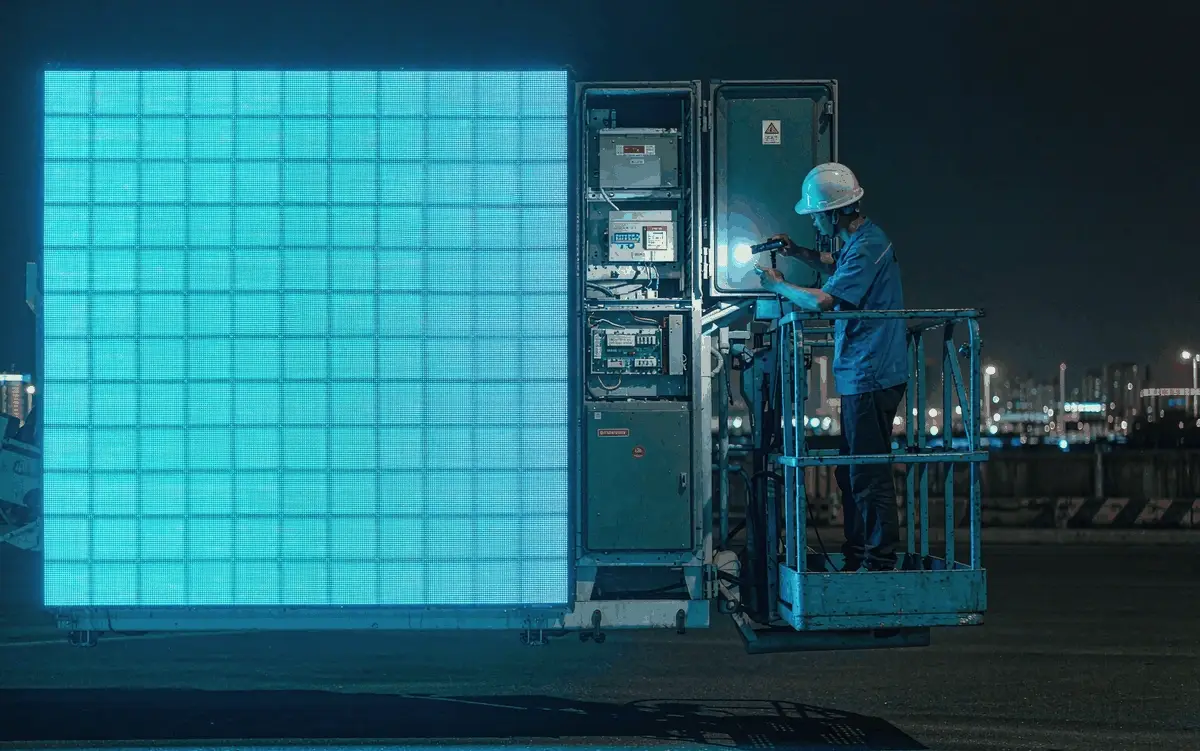
- Steel structure excluded from the quote. Often 15–25% of the project and the most common surprise.
- Freight, insurance and import duty. Sea freight plus duty can add 5–15% depending on the destination country and the declared value.
- Spare parts not ordered. Buying 3–5% spare modules with the first container costs a fraction of air-freighting two modules later.
- Commissioning and training not included. On-site commissioning, or at least a remote commissioning session, should be priced before you sign.
- Power and data infrastructure. Distribution board, cabling, grounding, lightning protection and the network link are usually the client's scope.
- Permits and night work. Road closures, permits and night installation hours raise labour cost sharply in city centres.
- Exchange-rate and delivery clauses. Agree whether the price is fixed and what happens if production slips beyond the agreed window.
8. Knowledge recap: LED billboard cost in one page
| Question | Short answer |
|---|---|
| What is a typical LED billboard cost per square meter? | About 600–900 USD/m² for basic P10, 950–1,500 USD/m² for P6 at 7,000 nits or more, 1,400–2,300 USD/m² for P4–P5. Display only, FOB China. |
| What is the largest single cost block? | Modules and driver ICs, roughly half of the installed cost. Pixel pitch decides most of it. |
| What is most often forgotten? | Steel structure, foundation, installation, freight and duty — commonly 25–40% on top of the screen price. |
| How do I lower cost without lowering quality? | Match pixel pitch to viewing distance, keep a 3–5% spare module ratio, and choose derated branded power supplies. |
| What should I compare between quotes? | Specification sheets and a bill of materials, not the total price. Then compare five-year cost: purchase, electricity, maintenance and downtime. |
| What is a healthy budget split? | Roughly 50% screen parts, 15% cabinet and power, 8% control system, 15% structure, 7% installation, 5% logistics. |
Frequently asked questions about LED billboard cost
Q1. How much does an LED billboard cost per square meter?
For outdoor billboards, indicative FOB China pricing is about 600–900 USD per square meter for basic P10, 950–1,500 USD for P6 at 7,000 nits or more, and 1,400–2,300 USD for P4–P5. Steel structure, foundation, installation and shipping are usually quoted separately and can add 25–40% to the total project cost.
Q2. Why do two quotes for the same size LED billboard differ so much?
Because “P6 outdoor” only describes the pixel pitch. Lamp brand and binning, driver IC, refresh rate, cabinet material, power supply, control system, warranty length and spare parts policy are all still open. A low quote usually removes cost from the parts that fail first, so a large price gap is a difference in specification, not only in margin.
Q3. Is a smaller pixel pitch always better for a billboard?
No. Pixel pitch should match the closest viewing distance. For a highway billboard seen from 10 meters or more, P8 or P10 looks as sharp to the audience as P4 at roughly half the cost. Buying P4 for a long-distance site increases LED count, power consumption and maintenance cost without improving what viewers actually see.
Q4. What is the biggest hidden cost in an outdoor LED billboard project?
The steel structure, foundation and installation, plus freight and import duty. Many buyers compare screen prices only, then discover that structure and installation add 25–40% and that spare modules, commissioning, training and after-sales support were never included in the quoted number.
Q5. How long does an outdoor LED billboard last?
A well-built outdoor LED billboard typically runs 8–10 years, with an LED lifetime of about 100,000 hours to half brightness. The parts that fail first are power supplies and driver ICs. Choosing derated branded power supplies and keeping 3–5% spare modules on site usually decides whether year five is cheap or expensive.
Get a line-by-line LED billboard cost breakdown
Send us your size, viewing distance and site photos. We will return a specification sheet, a per-cabinet bill of materials and two cost options — a value build and an engineered build — so you can compare LED billboard cost on facts instead of totals.
Request a quotationOutdoor, roadside and highway LED billboards · IP65 · 3–5% spare modules with every container
This article is an original technical and commercial summary prepared by our engineering and export team. All prices are indicative market ranges in USD, FOB China, for reference only, and do not constitute a quotation or an offer. Actual LED billboard cost depends on the approved specification, quantity, site conditions, freight and the exchange rate on the order date. Please refer to the project specification sheet and the signed contract for binding terms.