Buyer's Guide · Commercial LED Displays · 2026 Edition
LED Panels Price in 2026: What You're Really Paying For
Two buyers can request a quote for the same screen size and receive prices 40% apart — and both quotes can be correct. This guide unpacks what actually sits behind an LED panels price, so you can compare quotations like a pro and stop paying for things your project doesn't need.
In this guide
Two Quotes, One 40 m² Screen — and a 40% Gap
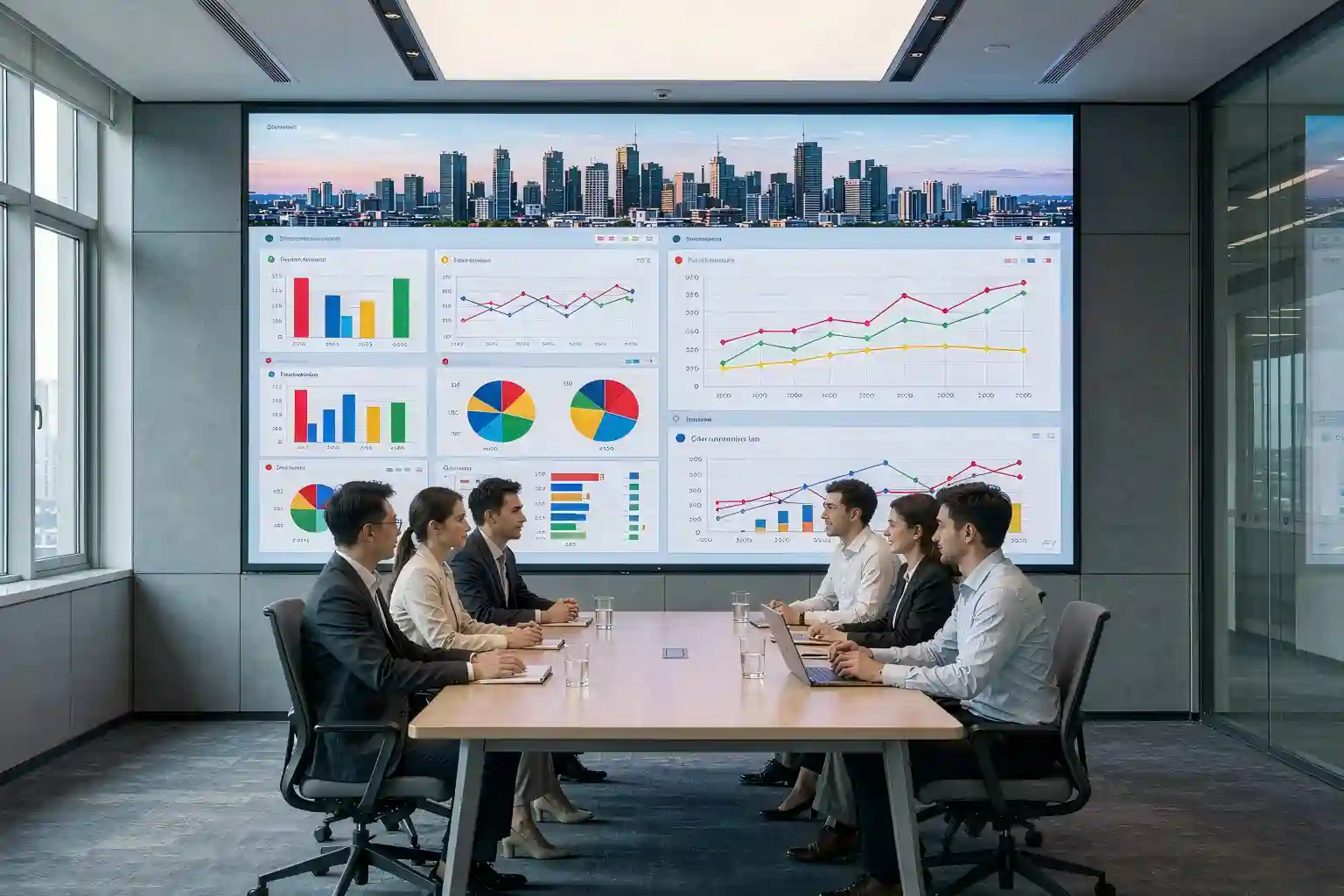
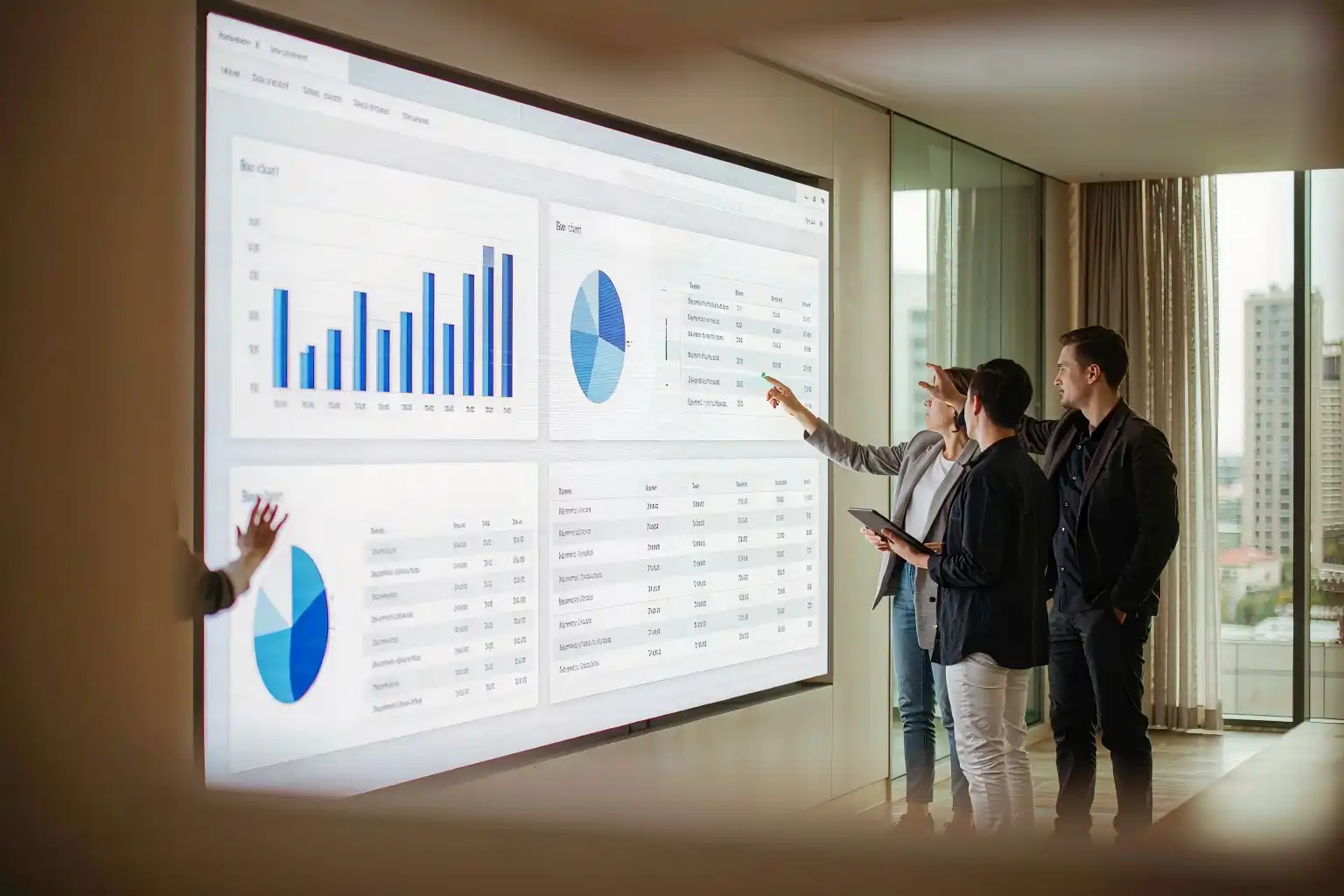
Last quarter, a distribution partner sent one identical request to three suppliers: "Price for a 40 m² indoor screen, meeting room, main viewing distance about 4 meters, used for video calls and recorded briefings." The three quotes came back roughly 40% apart from the lowest to the highest — a simplified but realistic illustration of how LED display panel price quotes work in this industry.
All three screens could switch on and play video. Only one, however, actually matched the buyer's use case. The cheapest quote cut corners exactly where the buyer would feel it: lower-grade lamps and entry-level driver ICs, which are fine for static slides but visibly noisy the moment a camera points at the wall — and this client's main scenario was recorded briefings. The most expensive quote specced an ultra-fine pitch the 4-meter viewing distance would never let anyone appreciate.
The lesson is simple: an LED panels price is never one number. It is a bundle of engineering decisions, and the price only becomes meaningful once the specification is fixed. The rest of this guide shows you exactly which decisions those are.
What Actually Drives LED Panels Price
Ask ten suppliers for an LED screen panel price and you will get ten different numbers — because eight variables move the total. Here is what you are really paying for:
1Pixel pitch
The #1 price lever. A smaller pitch packs far more LED packages into every square meter, so the LED panels price per square meter climbs steeply from P2.5 to P1.2. Choose pitch by viewing distance, not by habit.
2LED lamps
The light source itself. Brand-grade packaged lamps cost more than commodity ones but hold brightness and color far longer — often the single largest cost block inside the panel.
3Driver ICs
ICs decide refresh rate, grayscale depth and whether the wall looks clean on camera. High-refresh, camera-friendly ICs cost more and are worth every cent in broadcast rooms.
4Cabinet material
Steel is cheap and heavy; die-cast aluminum is lighter, dissipates heat better and stays flatter over years. The cabinet decides installation cost as much as image quality.
5Power supplies
Certified, high-efficiency PSUs run cooler and fail less. In a wall that runs 10+ hours a day, this is a reliability decision, not a detail.
6Control system
Receiving cards, video processor and software licenses. Redundant control adds cost but keeps mission-critical walls alive during a card failure.
7Certifications & testing
CE/FCC/EMC compliance and a 48–72h burn-in screening before shipment cost money now and save dead pixels later.
8Warranty & spares
A 2–5 year warranty with clear parts terms and 2–3% spare modules is priced into a fair LED panels price — and pays for itself the first time a module fails.
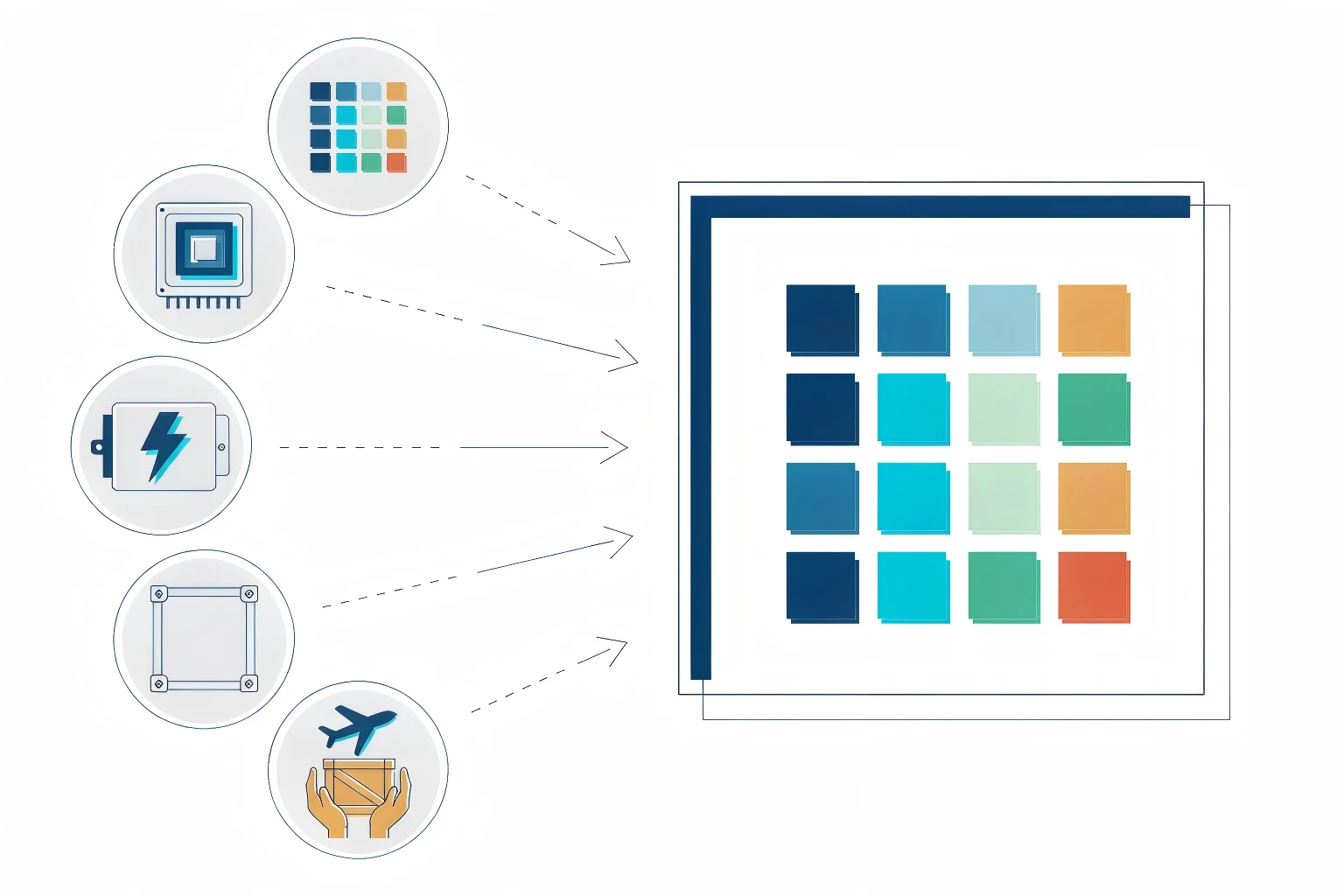
Rule of thumb: lamps and driver ICs together are usually the largest share of an indoor LED display panel price — and they are exactly where low quotes cut first. If a supplier won't name the lamp brand and IC model in writing, treat the price as unfinished.
How to Read an LED Panels Price Quote in 5 Steps
Once quotations land in your inbox, work through them in a fixed order. The flow below is the same checklist our project engineers use when auditing a competitor's or a client's quote:
If a quote does not state pitch, lamp grade, IC type, cabinet material and warranty in writing, it is not a price — it is a guess. Push every supplier to the same written spec before you compare a single figure; that alone removes most of the confusion in LED video wall price comparisons.
Typical LED Panels Price Ranges in 2026 (Indicative)
So how much do LED panels cost? The honest answer is a range, not a number. The chart below shows typical ex-works reference ranges per square meter, panel-only, based on 2026 market conditions. Treat them as orientation — real LED panels price figures depend on your spec, volume and Incoterms.
Why is each range so wide? Three reasons: component grade (lamps, ICs, PSUs), order volume, and certification requirements for the destination market. A hospital control room and a retail window may both order P1.5, yet their quotes can differ by a third — correctly.
| Red flag in the quote | What it usually means | Risk you carry |
|---|---|---|
| Price per m² only, no component list | Commodity lamps or unmarked ICs | Faster brightness decay; noisy on camera |
| Warranty under 2 years | Margin reserved for expected failures | Spare-part and shipping costs land on you |
| No aging/burn-in test mentioned | Factory skips 48–72h screening | Early dead pixels in the first months |
One more reframe before we move on: judge price per operating hour, not per square meter alone. A wall used 10 hours a day for 6 years runs more than 20,000 hours; a modest premium in the LED panels price that prevents even one major repair usually beats the cheapest bid over that lifecycle.
Hidden Costs First-Time Buyers Miss
The panel is the headline number, but rarely the whole number. Before benchmarking any LED panels price, make sure these landed-cost items are on your side of the comparison:
- Freight & Incoterms: EXW and DDP quotes can differ by a double-digit percentage once sea freight and insurance are added.
- Import duty & VAT: destination-country taxes on screens are real money; ask for the HS code early.
- Steel structure & installation: wall frames, rigging and on-site commissioning are usually quoted locally, not by the panel supplier.
- Control room hardware: video processor, sending cards, cabling and software licenses live outside the per-m² panel price.
- Spare modules: adding 2–3% spares at order time costs far less than a rushed re-order two years later.
- Power consumption: a fine-pitch indoor wall typically draws a few hundred watts per m² at full brightness — multiply by your electricity rate and daily hours.
Pro tip: ask suppliers to quote the same Incoterm (for example FOB or DDP) and to list power consumption per m² in the spec sheet. Those two numbers make cross-supplier LED video wall price comparison genuinely fair.
Key Takeaways on LED Panels Price
Short on time? Here is the whole guide in six questions to carry into your next negotiation:
| Ask this | Why it matters |
|---|---|
| What pixel pitch fits my viewing distance? | Pitch is the #1 price lever — over-specing wastes budget you never see on screen. |
| Which lamp brand and driver IC, in writing? | The two components that decide lifespan, color stability and camera-friendliness. |
| What does the warranty actually cover? | Parts-only vs parts + labor + new shipping is a big cost difference over 5 years. |
| Which Incoterm is the LED panels price based on? | EXW vs DDP can move the landed total by a double-digit percentage. |
| How many spare modules are included? | 2–3% spares ordered today avoid a costly emergency re-order later. |
| What is the power draw per m²? | It is a running cost for the next decade, not just a spec-sheet detail. |
FAQ: LED Panels Price Questions Buyers Ask Most
Q1: How much do LED panels cost per square meter in 2026?
As indicative ex-works ranges: indoor fine pitch roughly $900–5,500/m² depending on pitch (P2.5 to P1.2), and outdoor roughly $350–1,300/m² (P10 to P4). The spread within one pitch is driven mainly by lamps, ICs and cabinet build. Treat any single number as a placeholder until your specification is fixed.
Q2: Why do quotes for the same pixel pitch differ so much?
Same pitch does not mean same product. Lamp grade, driver ICs, cabinet material, power supplies and aging-test hours all move the LED panels price. Two P2 quotes can differ by 30–40% and both be accurate — simply for different quality levels.
Q3: Is the cheapest LED panel price ever the right choice?
Only when the use case is undemanding: distant viewing, short duty cycles and no cameras. For broadcast, retail flagships or control rooms, the cheapest quote usually costs more over five years in repairs, spares and downtime.
Q4: What should a fair LED panels price include?
A written spec (pitch, lamp brand, IC model, cabinet material), a 48–72h aging test before shipment, a 2–5 year warranty with clear parts terms, 2–3% spare modules, and ongoing remote technical support.
Q5: How do I get an accurate LED panels price for my project?
Send four things: screen size, installation scene, primary viewing distance, and content type. With those, a supplier can quote accurately within one business day — and you can compare every quote line by line.
Need Real Numbers for Your Project?
Send us your screen size, installation scene, viewing distance and content type — you will receive a tailored LED panels price list with spec-level transparency within one business day.
Get My LED Panels Price Quote