Synchronous Playback on a COB LED Display: How Video Source Direct Playback Actually Works
Every display engineer has lived this moment: the playback laptop closes, and an entire COB LED display wall goes black instantly. That's not a failure — that's synchronous playback doing exactly what it was designed to do. Adapted from Chapter 6 of the NovaStar NCE certification textbook LED Display Application — Fundamentals, this guide breaks down the concept of synchronous playback, the principle of video source direct playback, and the complete signal chain.
In This Guide
- The Screen That "Dies": Clearing Up a Common Misunderstanding
- What Is Synchronous Playback? Your Wall Is a Giant Monitor
- The Four Building Blocks of a Sync Playback System
- Video Source Direct Playback: True What-You-See-Is-What-You-Get
- Sync vs. Async: One Table to Tell Them Apart
- Why Fine-Pitch COB LED Displays Depend on Sync Playback
- Key Takeaways
1. The Screen That "Dies": Clearing Up a Common Misunderstanding
It's late night in a command center commissioning. The client points at a freshly lit fine-pitch wall and asks: "The screen goes blank the second we shut the playback PC — is this thing defective?"
Variations of this complaint surface in the industry every month. The root cause is rarely the panel — it's a misunderstanding of the two fundamental operating modes of an LED display: synchronous playback and asynchronous playback. In sync mode, the wall is essentially a giant monitor. No signal source, no picture. Grasping this distinction is a first step for every LED display engineer — and it directly shapes how you design and communicate COB LED display projects.
2. What Is Synchronous Playback? Your Wall Is a Giant Monitor
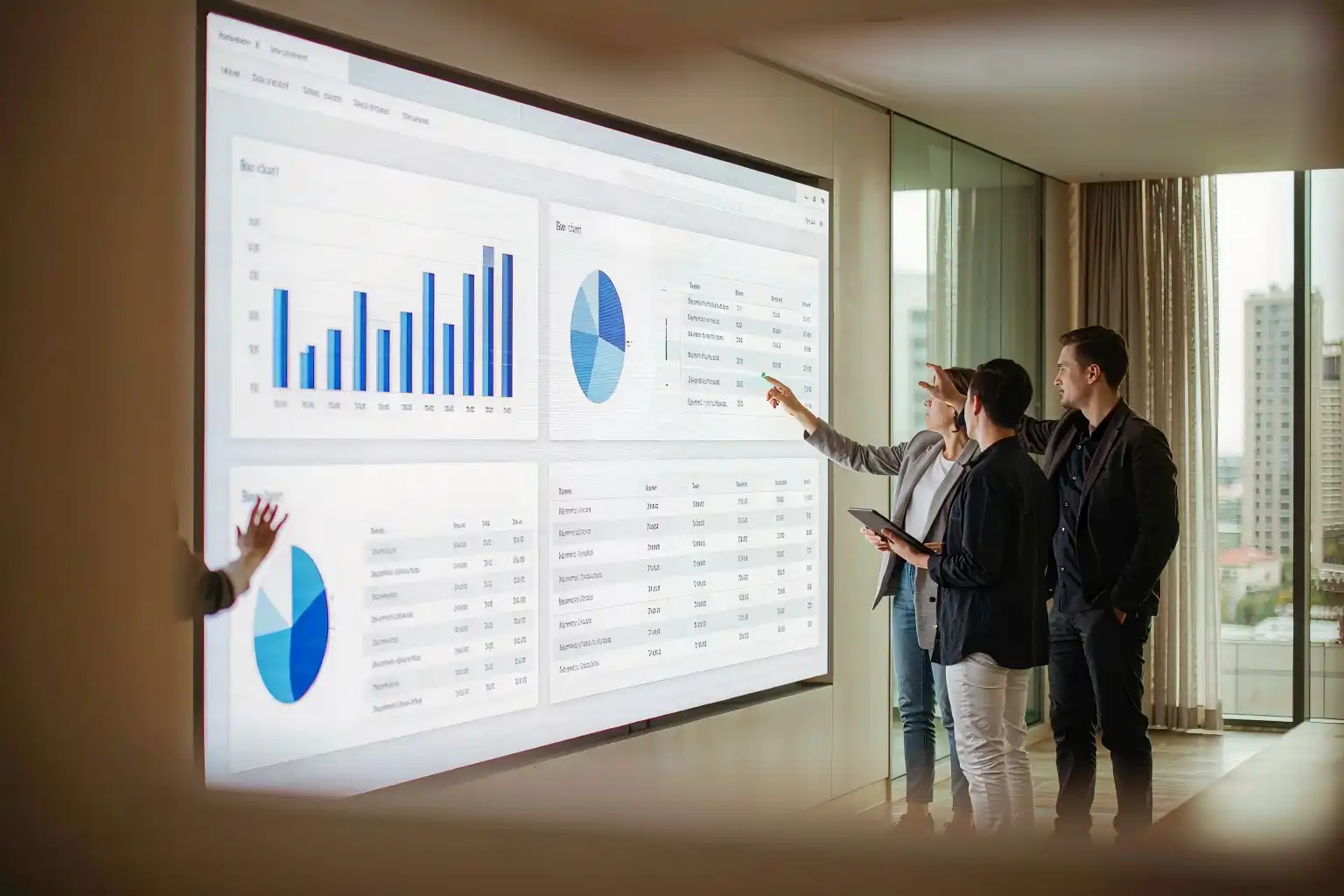
Synchronous playback means the content on the LED display matches the video source output in real time — frame by frame, with millisecond-level latency. Whatever the source outputs, the wall shows, right now.
The "video source" is typically a computer fitted with a sending card (or connected to an all-in-one video processor), but it can also be a camera, a media player, or a matrix switcher. As long as the source keeps outputting a signal, the wall keeps refreshing. Stop the output, and the wall enters a no-signal state — which is precisely the technical explanation behind the "black screen" story above.
3. The Four Building Blocks of a Sync Playback System
A typical synchronous playback system consists of four stages, connected in this signal chain:
The origin of the picture — most often a PC running playback software with a sending card installed, but also a camera, matrix switcher, or media player outputting a standard DVI / HDMI / SDI signal.
Installed in the source PC (or integrated into a video processor). It captures the graphics card output, slices the full frame into data packets, and distributes them over Ethernet to each receiving card.
Cat cabling (or fiber for long runs) carries the packets; each receiving card owns one zone of the wall and refreshes only the COB modules wired to it.
The display end point. Sync playback imposes requirements on refresh rate and frame-update frequency to keep the image stable and tear-free.
4. Video Source Direct Playback: True What-You-See-Is-What-You-Get
The most common — and most powerful — form of synchronous playback is video source direct playback: the LED wall simply mirrors the source's desktop output. Whatever appears on the control PC appears on the wall. Launch a slide deck, pull up a surveillance grid, switch to a live camera feed — it's on screen instantly, with no need to pre-upload any media to the display side.
What makes this WYSIWYG behavior possible is frame synchronization: the source outputs at a fixed frame rate (say 60 fps), the sending card captures frame by frame, and the receiving cards refresh the COB LED display in lockstep. Keep all three on the same beat, and the picture stays fluid and stable.
For engineers, direct playback delivers three immediate wins:
Live camera feeds, surveillance grids, and data dashboards hit the wall with millisecond-level latency — a hard requirement for command-and-control rooms.
Edit a slide, switch an input, change a layout — it's live the moment you do it. No copying files to the display side, dramatically faster on-site iteration.
5. Sync vs. Async: One Table to Tell Them Apart
The counterpart to synchronous playback is asynchronous playback: media files are pre-loaded onto the storage of an async control card or media player box, and the wall loops them standalone, disconnected from any video source. Neither mode is "better" — they simply serve different projects:
| Dimension | Synchronous Playback | Asynchronous Playback |
|---|---|---|
| Content source | Live output from a video source (PC desktop, camera, matrix) | Media pre-stored on the control card / player box |
| Persistent connection? | Required — disconnect means no signal | Not required — plays standalone on a loop |
| Real-time capability | Millisecond latency; supports live feeds and dynamic data | Not real-time; content updates lag |
| Typical applications | Command centers, broadcast studios, boardrooms, rental & staging | Storefront signage, billboards, information displays |
| Fit with COB LED display | The default mode for fine-pitch, high-res control-room projects | Better suited to standard-pitch advertising projects |
6. Why Fine-Pitch COB LED Displays Depend on Sync Playback
COB (Chip-on-Board) packaging bonds LED chips directly onto the PCB with an integrated optical encapsulation layer — the mainstream process for fine and ultra-fine pitch COB LED display walls. And the value of COB is concentrated precisely in applications that demand the highest image detail and real-time performance:
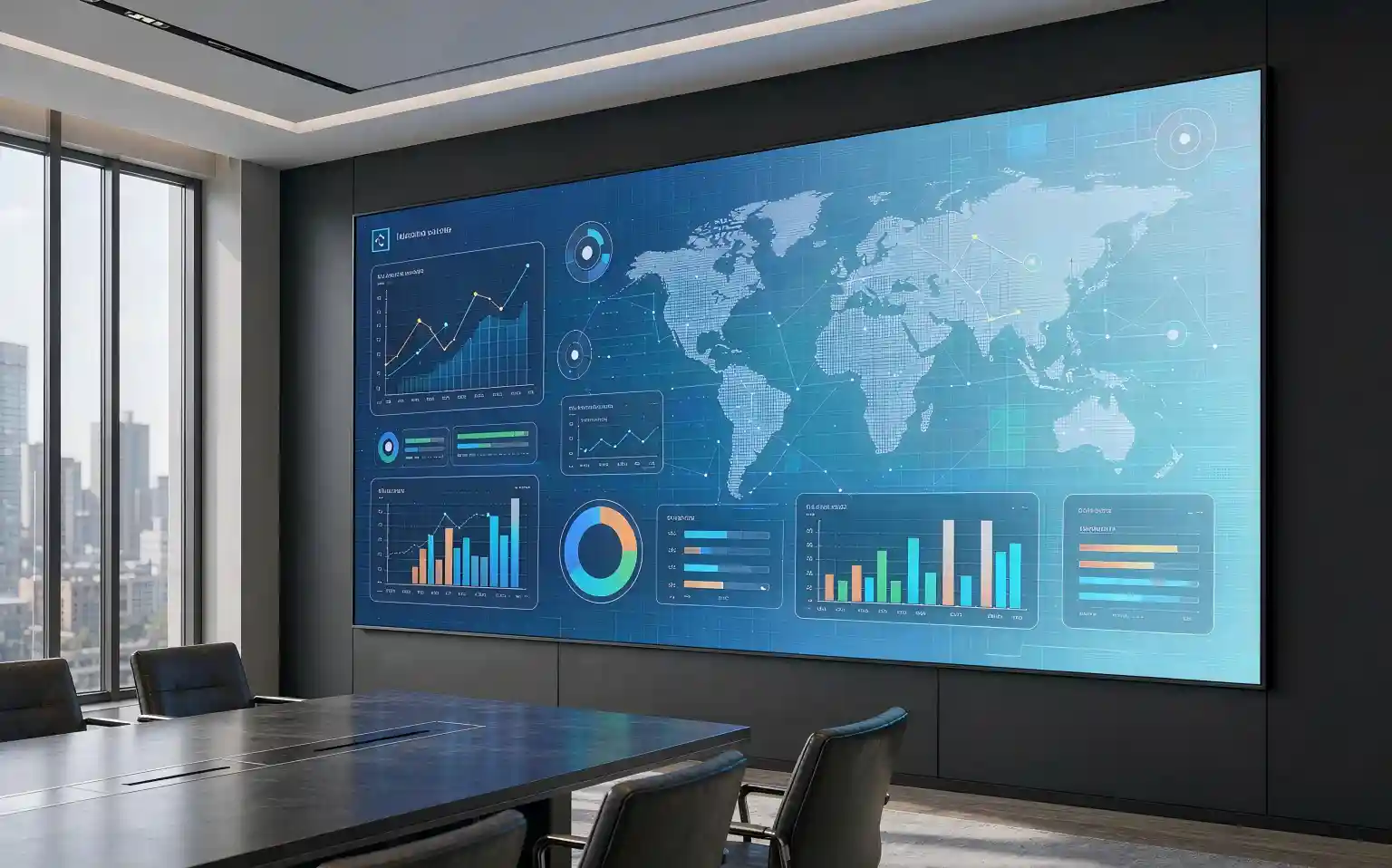
Multi-channel surveillance, GIS maps, and live dashboards must refresh in real time — the home turf of video source direct playback.
Director's feeds go live on air, demanding strict frame sync and high refresh rates to defeat camera scan lines.
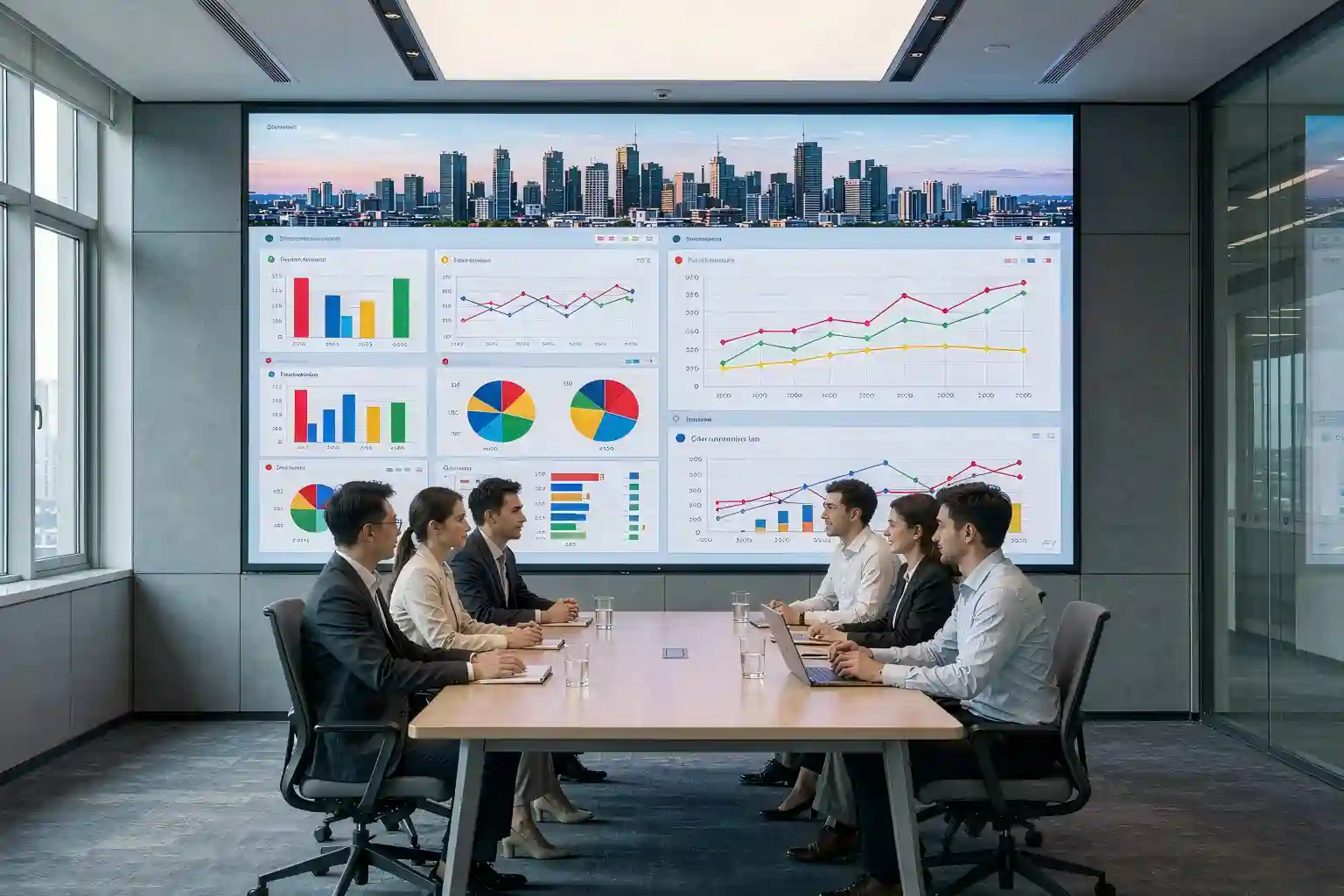
Screen sharing, video conferencing, and presentations need true WYSIWYG with instant source switching.
Put differently: a large share of the premium your customers pay for a fine-pitch COB wall is for the "real-time, high-definition big screen" experience itself. Planning the sync playback chain early — sending card loading, receiving card distribution, transmission distance, and redundancy — is where an engineer's value shows up in the final delivery.
7. Key Takeaways
| Concept | Essence |
|---|---|
| Synchronous playback | The LED display matches the video source frame-by-frame in real time; the wall acts as the source's external monitor |
| Video source direct playback | The wall mirrors the source's desktop output — WYSIWYG, live edits instantly on screen, zero pre-upload |
| System composition | Video source → sending card → (Ethernet/fiber) → receiving cards → COB LED display |
| Core mechanism | Frame sync: source frame rate, sending card capture, and wall refresh all locked to the same beat |
| Key parameters | Refresh rate ≥1920 Hz (≥3840 Hz for filmed walls); verify sending card pixel load and receiving card zone capacity |
| Sync vs. async | Sync = real-time + source-dependent; async = pre-stored + standalone loop; choose per application |
FAQ 1: My wall goes black when the playback PC shuts down. Is the screen broken?
No. In synchronous mode the wall is effectively a monitor — once the video source stops outputting, there is nothing to display. If you need standalone looping playback, specify an async solution or a player box with local storage.
FAQ 2: What does a PC need for video source direct playback?
A discrete graphics card with DVI/HDMI output, enough performance for your media, plus the correct sending card drivers and control software. Ultra-high-resolution projects need a multi-sending-card cascaded design.
FAQ 3: The synced image tears or flickers. Where do I start?
Check three things in order: whether the source's output frame rate matches the display's refresh settings; whether sending/receiving card firmware parameters (refresh rate, frame-update frequency) are configured correctly; and whether the Ethernet/fiber links meet quality and bandwidth requirements.
FAQ 4: Are COB LED displays suitable for synchronous playback?
Extremely. COB fine-pitch walls are built for command centers, studios, and other real-time-critical environments where sync playback is the standard operating mode. Just size the control system against the pixel pitch and total resolution.
FAQ 5: How large a wall can one sending card drive?
It depends on the card's maximum pixel load. Compare the wall's total resolution (width × height in pixels) against the card's spec; exceed the limit and you'll cascade multiple sending cards to share the load.
Planning a COB LED Display Project with Sync Playback?
We supply the PEL series video wall controllers and matching sending/receiving solutions to overseas LED display buyers and AV integrators — from load calculations to on-site commissioning support.
Get a Solution Quote →